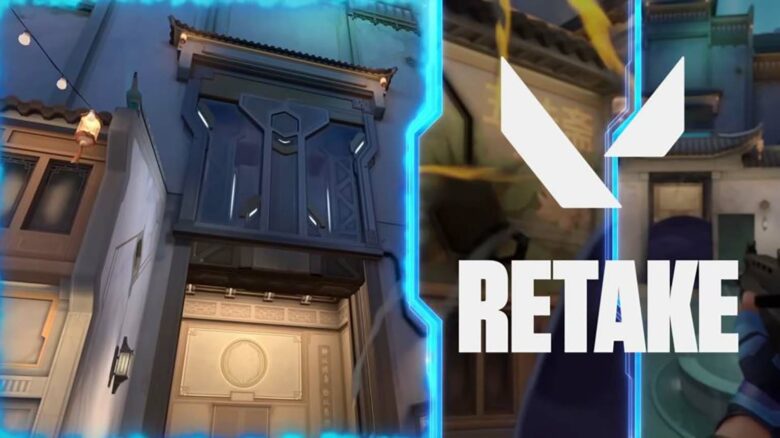
You can jump into VALORANT’s new Limited Time Mode, Retake, with the launch of Patch 13.00. The mode drops you straight into post-plant situations, letting you focus on holding sites or breaking through defenses without playing a full standard match.
Retake builds on a familiar tactical shooter concept, but it adjusts the structure and pacing to fit VALORANT’s agents and abilities. If you want to sharpen your post-plant decisions and site control under pressure, this mode gives you a focused way to practice.
How VALORANT Approaches Retake
You enter a 3v3 Spike format built entirely around post-plant play. Each round begins with the Spike already set, locking both teams into an immediate objective. The plant location comes from a predefined pool for each site, and the Spike auto-plants shortly after the round starts at a clearly visible position.
You either push in to reclaim control or hold your ground to secure the detonation. Teams switch roles every round, and the first side to claim five rounds takes the match.
A round ends in one of three ways:
- Full team elimination
- Successful defuse
- Spike detonation
It remains uncertain how the game handles eliminations when the clock leaves no time for a defuse.
You do not manage credits. Instead, you choose from loadout cards that scale in strength and provide weapons, shields, and ability charges.
Each match pulls from a random map and site. The launch pool includes:
| Available Maps |
|---|
| Ascent |
| Bind |
| Haven |
| Sunset |
| Summit |
This mode runs as a Limited Time Mode, with no confirmed end date.
VALORANT Retake vs CS2 Retakes
Both modes drop you into a post-plant scenario, but their structure changes how you approach each round.
| Feature | VALORANT Retake | CS2 Retakes |
|---|---|---|
| Team Size | 3 vs 3 | 3 Terrorists vs 4 Counter‑Terrorists |
| Rounds to Win | 5 | 8 |
| Side Swaps | Every round | No swaps |
| Loadouts | Card-based weapons and abilities | Card-based weapons and utility |
| Map Pool | 11 sites across 5 maps | 16 sites across 8 maps |
VALORANT keeps teams even and rotates sides every round, so you must adapt quickly to both planting and defusing roles. CS2 holds sides steady, which lets you refine either attack or defense without switching perspectives.
Both remove traditional economy systems and rely on preset loadout cards. In VALORANT, you also manage agent abilities, which adds utility timing and synergy to every retake attempt.