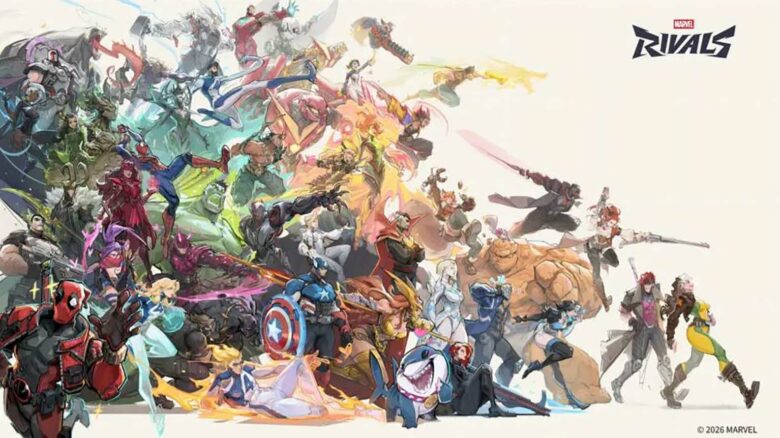
Marvel Rivals uses a structured competitive ladder that places you into ranks starting at Bronze and progressing up to One Above All. Most ranks include multiple tiers, which track your progress as you improve and face stronger opponents.
If you plan to play competitively, you need a basic understanding of how this ranking system works. Knowing how ranks and progression function helps you set expectations, measure improvement, and approach ranked matches with a clear goal.
Marvel Rivals ranks
You progress through nine core competitive ranks, starting at Bronze and ending at One Above All. Each step reflects your performance in ranked matches and adjusts as you win or lose.
Most ranks include internal tiers that refine placement. You move from Tier 3 to Tier 1 before advancing to the next rank, which creates smaller, measurable goals during your climb. The two highest levels skip tiers and stand on their own.
| Rank | Tiers |
|---|---|
| Bronze | 3, 2, 1 |
| Silver | 3, 2, 1 |
| Gold | 3, 2, 1 |
| Platinum | 3, 2, 1 |
| Diamond | 3, 2, 1 |
| Grandmaster | 3, 2, 1 |
| Celestial | 3, 2, 1 |
| Eternity | — |
| One Above All | — |
When you count every tiered step, the system includes 23 total rank levels. Bronze represents the entry point for competitive play, while One Above All marks the highest possible standing. Your rank updates based on match results, team impact, and consistency across games.
All Marvel Rivals ranks
You progress through a fixed ladder with tiered divisions. Ranks run from Bronze III–I, Silver III–I, Gold III–I, Platinum III–I, Diamond III–I, Grandmaster III–I, Celestial III–I, then Eternity, and the elite One Above All. Distribution visuals often appear alongside ladders. You climb by earning rank points each match during competitive play.
Marvel Rivals rank distribution
You see a clear concentration of players in the lower tiers, with Bronze holding the largest share of the ladder. Roughly 17.8% of PC players sit in Bronze, driven by a heavy population in Bronze 3. This spread shows many players still learning heroes, maps, and team coordination.
As you move upward, player counts stabilize across Silver, Gold, and Platinum, where each subrank holds comparable numbers. These tiers form the core of competitive play, and you are likely to encounter the widest mix of skill and playstyles here. Progress slows as you reach Diamond, but the population remains healthy and active.
Grandmaster, especially Grandmaster 3, stands out with a higher-than-expected number of players compared to adjacent tiers. Beyond that point, the ladder narrows quickly. Celestial and Eternity represent a small, selective group, while One Above All includes only a fraction of the player base at about 0.12%.
| Tier (PC) | Approximate players |
|---|---|
| Bronze (all) | 200K+ |
| Gold (all) | ~100K |
| Diamond (all) | ~125K |
| Grandmaster (all) | ~121K |
| One Above All | <1K |
How to rank up in Marvel Rivals
You climb by winning matches and earning rank points. Every 100 points moves you to the next tier. At the highest levels, your wins add to a public leaderboard instead of unlocking new tiers.
- Win matches to gain points
- Track progress toward each 100-point tier
- Compete consistently in Eternity and above