
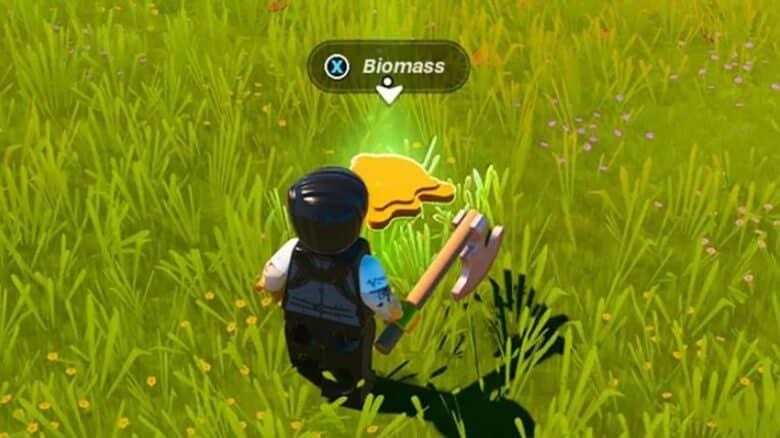
Biomass has become an essential crafting material in LEGO Fortnite, supporting the creation of Power Cells that supply energy for the game’s vehicles introduced in the Mechanical Mayhem update. Its role connects directly to the development of advanced machinery, giving players new opportunities to explore powered transportation within their builds.
Unlike common materials such as wood or stone, players do not gather Biomass directly from the environment. Instead, they must produce it through a specific process, adding a layer of strategy and management to resource collection. This makes Biomass both a functional and distinctive part of crafting in LEGO Fortnite.
How to Get Biomass in Lego Fortnite
Players can generate biomass by constructing a Compost Bin, a workstation that processes organic matter into usable resources. The crafting recipe appears once Planks are produced at a Lumber Mill. Building multiple Compost Bins improves efficiency since decomposition takes time.
| Required Material | Quantity | Source |
|---|---|---|
| Planks | 5 | Crafted from Wood at a Lumber Mill |
| Soil | 2 | Dug in Grasslands using a Shovel |
| Sand | 1 | Found in beach, desert, or shore areas |
| Fertilizer | 3 | Dropped by animals such as chickens, cows, and sheep |
After constructing the Compost Bin, players can add organic materials to begin production. Bones are the most practical input, granting 2 biomass each when broken down. Defeating skeletons at night provides a steady supply, and composting about 25 bones yields roughly 50 biomass—enough for one Power Cell.
For higher yields, Brute Scales and Cursed Bones produce 3 biomass each but drop less frequently. Meat from common animals such as cows, wolves, and sheep offers reliable results. Smaller organic materials like berries, vines, eggs, and wheat can be composted too, though they tend to generate smaller biomass amounts along with added fertilizer and soil.