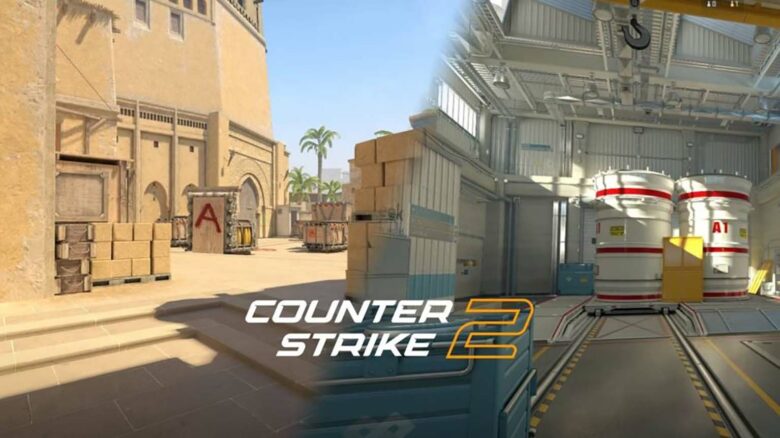
Counter-Strike 2 players show clear patterns in how they choose maps across professional and casual modes. You often base your pick on balance between Terrorist and Counter-Terrorist sides, overall structure, and how many viable strategies a map supports. These factors shape both tournament drafts and everyday matchmaking.
CS2 features several map pools, including Premier, Competitive, and Casual, along with specialized options such as Hostage Rescue, community maps, Wingman, and Retake. You will find that certain maps dominate esports and FACEIT queues, while others suit beginners, solo players, or more advanced tactical play. Understanding these trends helps you decide where to focus your practice and which map fits your goals.
The Most Played CS2 Maps in Esports and Premier
You compete on seven Active Duty maps in both professional tournaments and the in-game Premier mode. Tournament data from the first half of 2026 shows a clear split between two leaders, with the rest forming a tight middle tier.
Mirage and Dust 2 dominate picks at the top level. Their selection rates sit just above 22% each, making them the most reliable choices in both pro play and high-level Premier queues.
Below is the current popularity breakdown in major esports events:
| Map | Pick Rate (H1 2026) |
|---|---|
| Mirage | 22.94% |
| Dust 2 | 22.58% |
| Inferno | 14.16% |
| Ancient | 13.44% |
| Nuke | 12.54% |
| Overpass | 9.68% |
| Anubis | 4.66% |
You see a noticeable drop after the top two maps. Inferno, Ancient, and Nuke form a competitive middle group, each holding between 12% and 14% of total picks. Overpass trails behind them, while Anubis currently sits at the bottom.
Valve adjusts the pool every six months, typically after a Major. The least-picked map often leaves the rotation to keep the meta active.
Anubis joined the pool most recently and remains unlikely to rotate out so soon. Overpass stands as the most probable removal candidate after the Cologne Major in June 2026.
Cache returned to CS2 on April 29, 2026. You can expect strong consideration for its inclusion in the next Active Duty update, given community expectations and Valve’s recent signals.
Competitive Mode Map Variety Beyond Active Duty
You can queue every Active Duty map in Competitive, but this mode also adds several alternatives that you will not see in Premier. These extra options change pick trends and queue times.
Reserve selections
- Train
- Vertigo
- Cache
Community creations
- Warden
- Stronghold
Hostage Rescue maps
- Alpine
- Office
- Italy
Pick rates shift compared to Premier. Dust 2 leads Competitive with about 27.6% of matches, slightly ahead of Mirage at 25.1%.
Cache sits just behind those two and often gives you the shortest wait time in queue. In contrast, Overpass sees the lowest activity among the core competitive maps.
Community and Hostage Rescue maps attract a much smaller share of players. You will find matches on them, but they remain niche compared to the standard bomb-defusal pool.
FACEIT map popularity rankings
When you queue on FACEIT, you play within the Active Duty pool, now expanded with the return of Cache. Its addition has shifted pick rates across the platform during the opening weeks of Season 8.
Below are the current selection percentages:
| Map | Pick Rate |
|---|---|
| Mirage | 26.85% |
| Dust 2 | 23.63% |
| Ancient | 11.81% |
| Anubis | 10.48% |
| Cache | 8.97% |
| Inferno | 8.65% |
| Nuke | 6.77% |
| Overpass | 2.84% |
You see Mirage leading by a clear margin, widening its gap over Dust 2 compared to other matchmaking environments.
Anubis holds a stronger position here than it typically does in Premier play. In contrast, Inferno and Nuke attract fewer picks, while Overpass remains a niche choice.
Cache enters the pool mid-table, immediately competing with established staples rather than sitting at the bottom.
The Most Popular CS2 Maps Explained
Strong map knowledge shapes your results in Counter-Strike 2. You win more rounds when you understand common setups, utility timings, and rotation paths.
Players at every level return to a small group of maps because they offer balance, strategic variety, and consistent competitive value. These battlegrounds reward preparation without relying on constant redesigns.
Mirage – A Balanced Classic With Flexible Play
Why players queue it often:
- Even split between CT and T win potential
- Clear structure with room for creative executes
- Familiar layout for new and experienced players
You gain flexibility on Mirage because each area supports multiple approaches. A site encourages layered executes through Ramp, Palace, and Connector, while B site demands tighter coordination through Apartments and short control.
Mid control drives the round. When you secure Window, Catwalk, or Connector, you open fast splits onto either bombsite and force defensive rotations.
Mirage stays popular because it supports simple defaults and advanced utility combinations. You can practice core mechanics here without feeling locked into one rigid style.
Dust 2 – Open Sightlines and Direct Duels
Why it remains a staple:
- Straightforward layout
- Strong sniper impact
- Long-standing presence in the series
Dust 2 gives you immediate action. Long A favors early picks and coordinated utility, while B site compresses fights into tighter angles near tunnels and platform.
Mid Doors create constant pressure. You can attempt early picks, boost for information, or use utility to block vision and shift momentum.
The map rewards aim, positioning, and timing more than complex rotations. You often rely on sharp mechanics and disciplined grenade usage to control space and close rounds.
Inferno – Tight Control and Utility Battles
Why it keeps its place:
- High emphasis on grenade usage
- Multiple attack routes toward A
- Demanding Banana control
Inferno forces you to manage utility carefully. Banana becomes a contest of smokes, molotovs, and counter-flashes from the opening seconds.
If you attack A, you choose between Apartments pressure, short control, or split executes through Arch. Defenders must read your cues and avoid over-rotating too early.
You face more structured rounds here. Mistimed grenades or poor spacing often decide outcomes before the final execute begins.
Ancient – Modern Design With Strategic Depth
Why it stands out:
- Competitive balance
- Clear three-lane structure
- Adaptable mid-round options
Ancient introduces a newer competitive environment while preserving traditional map logic. You move through A Main, Mid, and B Lane with multiple branching paths that support fakes and late-round adjustments.
Mid control plays a central role. When you hold it, you shorten rotations and apply pressure to both bombsites.
You benefit from disciplined teamwork on Ancient. The layout rewards coordinated trading and structured defaults rather than solo aggression.
Nuke – Vertical Pressure and CT Strength
Why teams rely on it:
- Distinct upper and lower bombsites
- Strong defensive setups
- Complex rotations
Nuke challenges your spatial awareness. With one site above the other, you must constantly track sound cues and utility usage to predict hits.
As a defender, you can build strong crossfires and delay tactics. As an attacker, you need precise smokes for Outside and controlled upper executes to avoid early losses.
Rotations happen quickly through vents and ramps. If you misread positioning, you lose control of the round within seconds.
Cache – Familiar Structure With a Unique Setting
Why players welcomed its return:
- Clear three-lane design
- Balanced engagements
- Accessible for newer players
Cache offers a structured environment that supports both basic and advanced strategies. You can run straightforward A executes through A Main and Squeaky or apply mid pressure to split B.
Mid remains the engine of the map. When you control Boost and Highway, you restrict defensive movement and open late-round options.
The layout feels readable, which helps you develop timing and coordination. At the same time, it provides enough tactical depth to reward refined team play.
Top Starter Maps for New CS2 Players
You should begin with maps that support clear structure and simple rotations. These layouts help you practice positioning, crosshair placement, and basic team coordination without complex pathing.
- Dust 2 – Open sightlines and direct routes teach aim fundamentals and mid control.
- Mirage – Balanced bombsites help you learn utility timing and standard executes.
- Ancient – Defined lanes encourage disciplined movement and controlled map pressure.
Most Demanding CS2 Maps
If you want to test your coordination and map knowledge, queue into these battlegrounds:
- Nuke – You manage two stacked bombsites and constant vertical threats. The map often favors defenders, so you must execute clean, well-timed T-side strategies with precise communication.
- Overpass – You deal with a wide layout, frequent boost spots, and long rotation paths that punish slow decisions.
- Anubis – You fight through narrow lanes and contest mid control around the canal, where quick trades decide rounds.
- Vertigo – You navigate tight choke points across multiple floors, where utility usage and spacing determine success.
Most Balanced Maps in Counter-Strike 2
You find the strongest balance on maps that both professionals and new players queue repeatedly. These battlegrounds limit extreme side advantages and reward structured play.
- Mirage – Clear mid control and flexible rotations support both sides.
- Dust 2 – Open sightlines and simple layout create even duels.
- Ancient – Tight chokepoints and layered bombsites encourage coordinated executes and stable defenses.
Top Maps for Solo Queue Success
When you queue alone, pick maps that reward individual impact and simple defaults. You can create space, take duels, and rotate without heavy coordination.
- Mirage – Clear mid control and common smoke lineups let you make plays on your own.
- Dust 2 – Direct lanes and fast executes favor sharp aim and confident entries.
- Ancient – Strong lurk routes and defined bombsites help you punish weak rotations.
- Vertigo – Tight choke points and vertical fights allow aggressive control from ramp.
Pro Match Veto Patterns and Map Selection Trends
You see clear strategy during the veto phase. Teams analyze opponents in detail, and coaches prepare targeted bans and picks based on strengths, weaknesses, and recent results.
Many lineups maintain a permanent ban. They remove that map immediately to avoid uncomfortable territory or areas they rarely practice. Overpass, Anubis, and Nuke frequently disappear in the opening ban phase.
First picks usually highlight a team’s strongest battleground or exploit a rival’s weakest one. Dust II and Mirage often appear as early selections because teams trust their structure and depth on these maps.
If Nuke or Overpass survive the initial bans, you often see them chosen later in the series rather than immediately.
In extended best-of-five matches, Anubis regularly remains unpicked until the final map, serving as a potential decider.
You should expect flexibility. Veto patterns shift between events, and teams adjust constantly to form, preparation, and opponent-specific planning.
FAQ
Which map do you see most often in CS2 right now?
You will encounter Mirage and Dust 2 more than any other maps. They dominate both professional events and regular matchmaking, and players continue to favor them for their balanced design and familiar structure.
When should you expect the next Active Duty map pool update?
You can expect the next adjustment shortly after IEM Cologne 2026, scheduled from June 2 to June 21, 2026. Another update is likely after the Singapore Major in early 2027.
Is Cache returning to top-level play?
Yes. Cache rejoined CS2 on April 29, 2026. Many players anticipate that Valve will move it into the Active Duty lineup during the summer rotation, with Overpass the most likely map to leave.
Which maps suit beginners best?
If you are new, start with:
- Dust 2
- Mirage
- Ancient
These maps offer clear layouts, balanced bombsites, and straightforward engagements that help you learn positioning, utility timing, and basic rotations.
What makes certain maps harder to play?
You will struggle more on maps that demand tight coordination and strong utility usage.
| Map | Why It Feels Difficult |
|---|---|
| Nuke | Multi-level layout and complex rotations |
| Vertigo | Narrow choke points and vertical fights |
| Anubis | Detailed mid control and utility precision |