You are seeing the Mobile Legends: Bang Bang competitive scene move into a new phase with the release of its 2026 esports roadmap. MOONTON Games revealed the plan during the M7 World Championship Grand Finals in Jakarta, signaling a structured approach to the game’s next year of competition.
This roadmap centers on a redesigned five-region system that reshapes how tournaments operate worldwide. As you look ahead to 2026, this framework sets clearer pathways for national, regional, and international events across the MLBB ecosystem.
What you need to know about the MLBB 2026 roadmap
A scalable five-region global competitive system
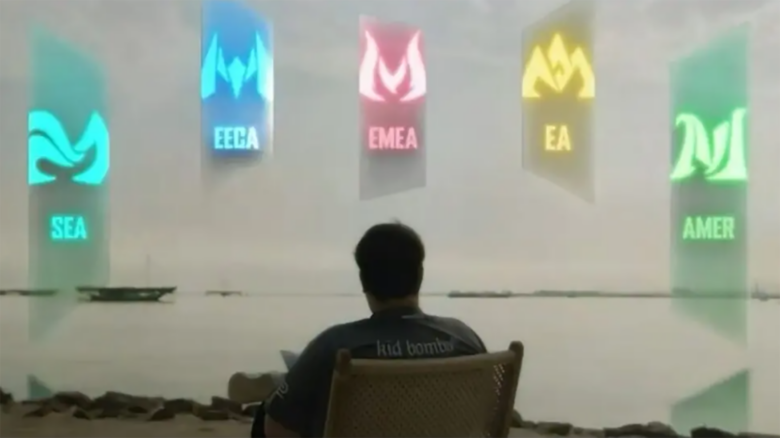
You will see MLBB esports operate under a unified structure built around five competitive regions. Each region manages its own leagues and development while staying connected to a shared international calendar.
The five regions are:
| Region Code | Coverage Area |
|---|---|
| SEA | Southeast Asia |
| EECA | Eastern Europe and Central Asia |
| EMEA | Europe, Middle East, and Africa |
| EA | East Asia |
| AMER | The Americas |
This setup avoids over-centralization. You get stronger regional identities, clearer player pathways, and consistent international alignment.
With MLBB already achieving large global reach, the roadmap prioritizes long-term stability. Emerging regions can now grow at a comparable pace to established ones without losing competitive relevance.
A new interregional Championship Tour framework
You will notice the introduction of a Championship Tour designed to connect regions without replacing domestic leagues. This system applies primarily to SEA, East Asia, and the Americas.
The tour acts as a competitive bridge. It allows regions to test strategies, develop metas, and build rivalries outside their local circuits.
Key characteristics of the Championship Tour include:
- No disruption to existing national leagues
- Regular cross-region competition
- Clear progression into major international events
You get more diverse matchups while preserving the importance of regional tournaments.
National representation at ENC and the Asian Games
MLBB now sits alongside traditional international competitions. You will see the game featured at the Esports Nations Cup (ENC) 2026 in Riyadh.
ENC focuses on national teams rather than clubs. Thirty-two countries will compete, with direct invitations tied to a formal ranking system. National pride becomes a central theme of competition.
MLBB will also appear as a medal event at the 20th Asian Games Aichi–Nagoya 2026. This follows its continued presence at the SEA Games.
You can expect stricter competitive standards, formalized team selection, and broader recognition beyond esports-only audiences.
M8 World Championship expands into new host regions
The M8 World Championship introduces major geographic firsts. You will see the M8 Finals hosted in Istanbul, Türkiye, marking the first M Series final held in Europe.
At the same time, Thailand will host the M8 Wild Card stage, becoming its first M Series venue.
This approach places emerging regions directly into premier events. Instead of supporting from the sidelines, these markets now host critical stages of the world championship.
The move reinforces the five-region strategy. You get a more balanced global presence without shifting focus away from competitive quality.
Malaysia’s MPL moves to a partner-based league model
You will see MPL Malaysia adopt a partnership structure starting in 2026. The league will feature eight partner teams, each guaranteed a permanent slot.
This model reduces uncertainty for organizations. Teams can invest in players, staff, and infrastructure with long-term planning in mind.
For you as a viewer, this change aims to deliver:
- Greater roster stability
- Consistent team branding
- Improved competitive continuity
The partnership system aligns Malaysia with broader ecosystem goals as MLBB expands globally.
MLBB resets its ceiling as M7 defines the next standard
You see the scale of MLBB’s growth clearly at M7 in Jakarta. The Grand Finals between Aurora Gaming PH and Alter Ego reached 5.68 million peak concurrent viewers, setting a new high for mobile esports viewership.
You also witnessed records fall earlier in the event. The Swiss Stage and Wild Card rounds each drew the largest audiences in MLBB history, showing sustained attention beyond the final match.
| M7 Milestone | Result |
|---|---|
| Peak live viewers | 5.68 million |
| Swiss Stage viewership | New MLBB record |
| Wild Card viewership | New MLBB record |
You watched Aurora Gaming PH secure a decisive 4–0 win, earning the Philippines its sixth world championship. The result reinforced regional dominance while maintaining competitive clarity.
You experienced more than matches through the M7 Carnival. By combining esports with music and pop culture, the event positioned MLBB as a broader entertainment platform with measurable global reach.