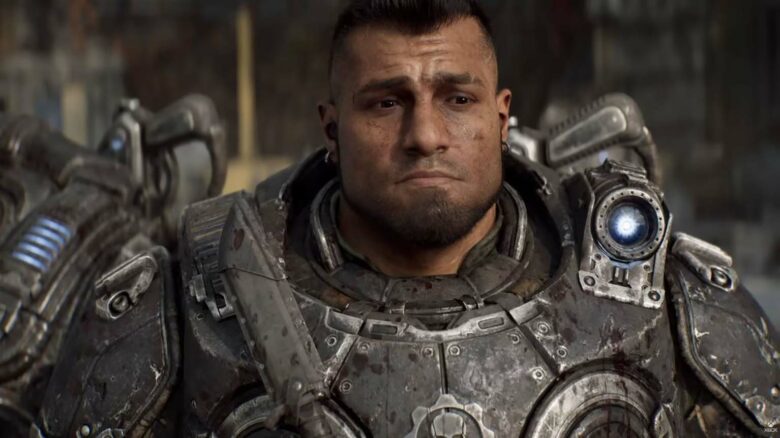
You return to the origins of the Locust invasion in Gears of War: E-Day, a prequel that revisits Emergence Day and the chaos that reshaped the world. Instead of continuing unresolved threads from Gears of War 5, the game shifts focus to the first moments of the conflict and the sudden underground assault that defines the series.
You also experience the franchise’s move to Unreal Engine 5, which updates the visual presentation and supports technical changes across core systems. As Microsoft positions the title as a major 2026 exclusive, The Coalition adjusts long-standing features while preserving the identity that defines Gears of War.
Gears of War: E-Day Makes Changes to Active Reload
You will notice that E-Day reworks Active Reload as part of the series’ transition to Unreal Engine 5. The developer rebuilt core systems during the engine shift, and that process led to adjustments in movement, vertical level design, and combat feedback. Reloading did not stay untouched.
Active Reload has defined Gears of War since 2006. Instead of passively waiting through a reload animation, you engage with a timing-based meter and try to stop it within a marked zone.
This system traditionally offered three outcomes:
- Standard reload – no bonus, no penalty
- Perfect reload – increased damage or other temporary benefits
- Failed reload – a penalty that slows your return to combat
In E-Day, the most visible change involves the meter’s position. Rather than sitting in the top-right corner, the Active Reload bar now appears in the center of the screen.
Playtesting showed that placing the indicator closer to your focal point made players interact with it more consistently. By integrating the meter directly into your line of sight, the mechanic feels less like a UI element and more like part of the firing rhythm.
If you prefer the classic layout, you can move the indicator back to the top-right corner. The option ensures returning players keep the familiar setup while newcomers adapt to the revised presentation.
The redesign goes beyond placement. Weapons now introduce unique behaviors tied to reload states, adding more context to your decisions.
For example, when you reload the Gnasher shotgun, you see shells inserted one at a time. Instead of waiting for the full sequence to finish, you can interrupt the process and fire after loading only a few shells.
That flexibility creates a trade-off:
| Choice | Immediate Benefit | Potential Cost |
|---|---|---|
| Interrupt reload early | Faster response to nearby threats | Lose chance at a perfect reload bonus |
| Complete reload and time it perfectly | Temporary weapon boost | Longer exposure during animation |
You must decide whether survival in the moment outweighs the reward of a perfectly timed reload. The system encourages situational awareness rather than automatic timing.
These changes align with broader gameplay updates. Movement appears smoother, traversal options feel more flexible, and environments emphasize verticality. By repositioning and expanding Active Reload, the mechanic integrates more tightly with this faster, more reactive combat flow.
The technical upgrade also affects performance expectations. On PC, you need at least an Nvidia GeForce RTX 2060 or AMD Radeon RX 6600, along with 130 GB of storage space. Stronger hardware improves visual fidelity and frame consistency, especially given the engine’s lighting and detail improvements.
You can play Gears of War: E-Day on:
- Xbox Series X/S
- PC
- Game Pass
The game launches on October 6, 2026, under Xbox Game Studios, and carries a Mature 17+ rating for violence, blood, language, and in-game interactions.
Active Reload remains central to how you fight. E-Day adjusts its placement, expands its weapon-specific effects, and gives you more control over how and when you commit to each reload decision.