Dota 2 The International 2026 Shanghai
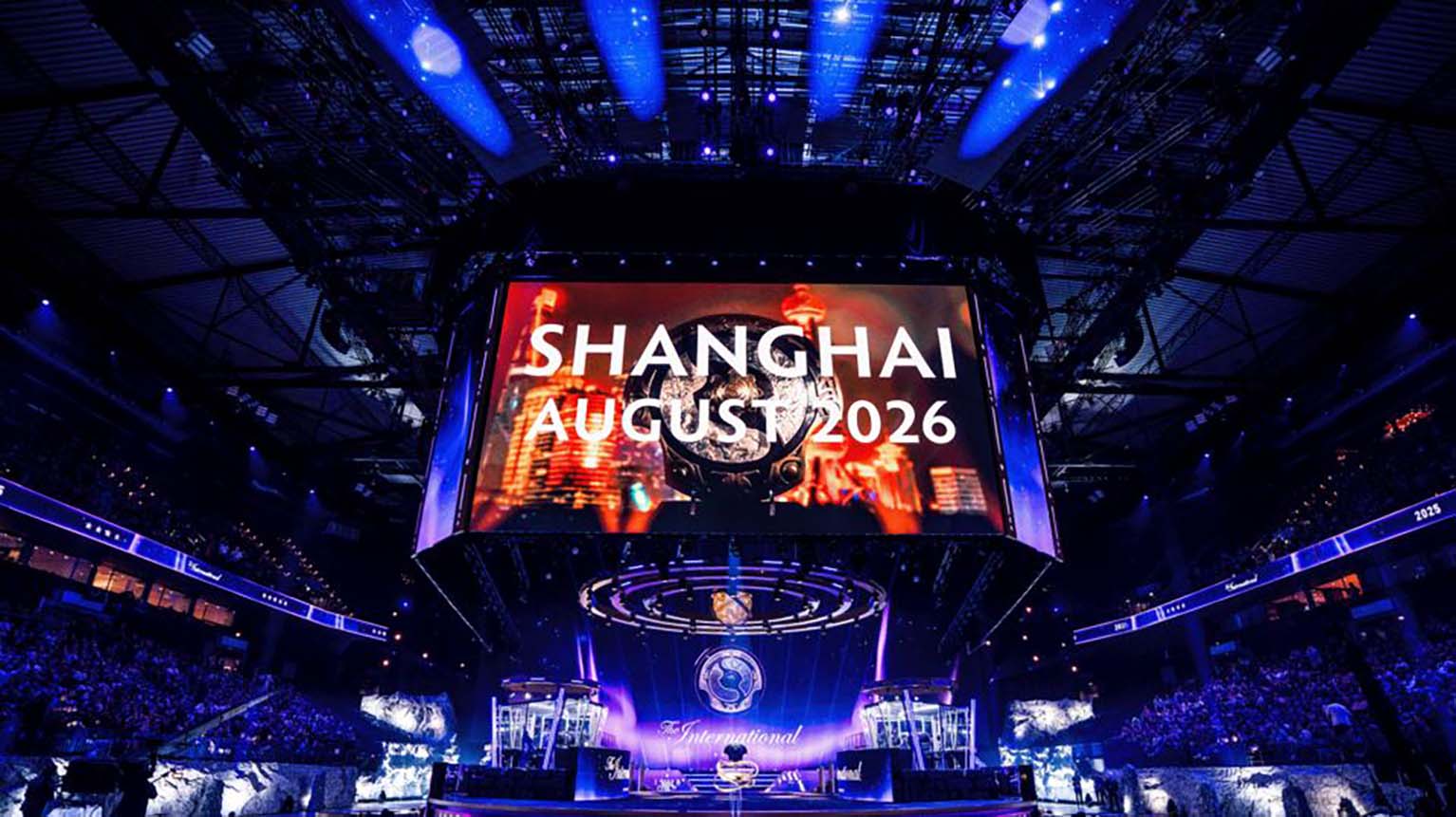
The International 2026, Dota 2’s premier world championship, is set to take place in Shanghai, China. The decision to bring the tournament back to the city was officially announced during the closing stages of the 2025 season.
This marks a return to Shanghai, which previously hosted the event in 2019, and reflects Valve’s continued commitment to holding the competition in regions with strong competitive and fan support. The announcement immediately positioned Shanghai as the next global stage for one of esports’ most recognized tournaments.
The International 2026 Set for Shanghai, China
The fifteenth edition of Dota 2’s premier tournament will take place in Shanghai, China in August 2026. This marks the event’s return to the city after previously being hosted there in 2019. It also signals another appearance in Asia, following Singapore’s role as host in 2021.
In recent years, Europe has been the central hub for the competition, with Copenhagen and Hamburg serving as venues for the last two editions. The move back to China reflects the region’s continued importance in the competitive Dota 2 landscape.
Notable host cities through the years include:
- Seattle, USA – hosted six consecutive tournaments (2012–2017)
- Vancouver, Canada – hosted in 2018
- Bucharest, Romania – hosted in 2021
- Shanghai, China – hosted in 2019 and now again in 2026
| Year | Edition | Host City |
|---|---|---|
| 2019 | TI9 | Shanghai, China |
| 2021 | TI10 | Bucharest, Romania |
| 2022 | TI11 | Singapore |
| 2024 | TI13 | Copenhagen, Denmark |
| 2025 | TI14 | Hamburg, Germany |
| 2026 | TI15 | Shanghai, China |
Is Dota 2 as a game still popular in China?
Dota 2 no longer holds the same dominance in China that it once enjoyed. Compared to its peak years during the TI3 to TI8 era, the game has seen a steady reduction in visibility and player engagement. By late 2025, it did not even rank among the top 20 most played titles in China’s internet cafés, while League of Legends continues to remain in the top three.
The reduced presence does not mean the game is irrelevant. Even a title considered “less popular” in China can still maintain a player base larger than what many countries see for their most successful games. This reflects the scale of the Chinese gaming market, where competition is intense and trends shift quickly.
Several factors explain this decline. Government restrictions introduced in recent years have limited under-18 players to only three hours of gaming per week, primarily on weekends and holidays. This rule has slowed the development of new talent and reduced the entry of younger players into the Dota 2 ecosystem.
The retirement of legendary Chinese players such as Lu “Somnus / Maybe” Yao, Bai „rOtK“ Fan, and Zeng “Ori” Jiaoyang has also left a gap in the scene. Their exits removed some of the most recognizable faces that once inspired new competitors and energized fans.
At the same time, the growth of mobile gaming has shifted attention away from PC-only titles like Dota 2. Other publishers, especially Tencent, have aggressively promoted their games in China, while Valve’s local partner, Perfect World, has not matched that level of marketing strength. This imbalance has further limited Dota 2’s reach.
Why China Still Works as a Stage for The International
Although Dota 2 has lost ground in everyday popularity, China remains one of the most important regions for hosting major esports events. The country offers strong infrastructure, large arenas, and a passionate audience that continues to show up in force for international tournaments.
Chinese fans are known for their energy at live events, and their support has consistently been felt at past Internationals, regardless of location. Hosting The International in Shanghai provides Valve and Perfect World with both cultural and financial opportunities. For instance, limited-edition in-game bundles inspired by Chinese themes could generate significant revenue, similar to how other publishers have achieved massive sales through region-specific promotions.
The return to Shanghai in 2026 is expected to deliver a high-profile spectacle. The 2019 edition set a high bar with a live orchestra, traditional performances, and a packed Mercedes-Benz Arena. With seven years of progress since then, the upcoming event has the potential to showcase both esports and Chinese culture on a global stage.
| Factor | Impact on Dota 2 in China |
|---|---|
| Government gaming restrictions | Limits new player growth |
| Retirement of star players | Reduces fan engagement |
| Rise of mobile gaming | Shifts focus away from PC titles |
| Strong live audiences | Keeps China ideal for major events |