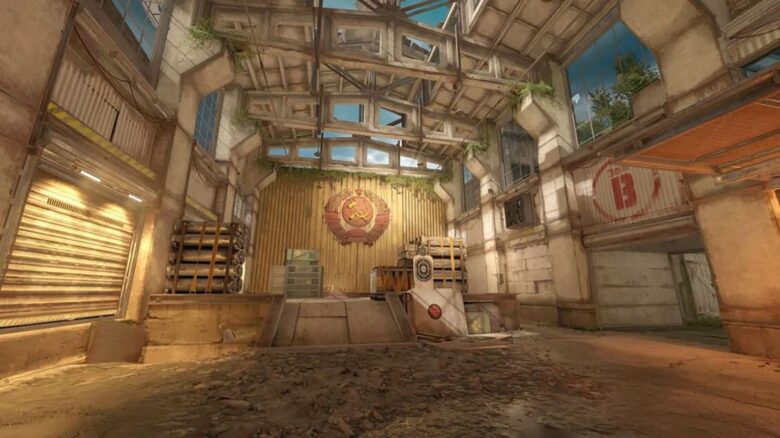
You are about to see Cache return to Counter-Strike 2, following a recent tease from Valve on X that confirms the map is finally on the way after more than two years. You may have played the FMPONE remake, but that version does not carry the same weight as an official place in the Active Duty pool.
You should not assume Cache will enter Active Duty immediately, since Valve often tests returning maps in Competitive to refine balance. You now face the central question shaping the discussion: which existing CS2 map would Cache replace if it earns a full competitive slot.
Mirage is a contender, but it’s unlikely
You can make a strong case for taking Mirage out of rotation. After more than a decade in top-tier play, the map feels predictable, even when you queue with mixed skill levels.
You already know the defaults, the timings, and the common utility lineups. At higher ELO, many rounds play out from muscle memory rather than adaptation, which limits strategic variety.
Mirage shares several traits with Cache, which makes the comparison unavoidable:
| Aspect | Mirage | Cache |
|---|---|---|
| Layout style | Three-lane | Three-lane |
| Pug friendliness | Very high | Very high |
| Strat depth at scale | Well-explored | Familiar but fresher |
Swapping Mirage for Cache would not radically change how you approach rounds. You would still rely on comfort picks, fast mid control, and rehearsed executes, just in a different setting.
Despite that logic, removal remains unlikely. Mirage attracts a large share of the player base, including players who queue almost exclusively for it. You represent a smaller risk than that group when Valve weighs changes.
From a competitive angle, Mirage still delivers reliable results. You continue to see tight halves, comeback potential, and balanced win conditions in professional matches.
That combination of player loyalty and proven match quality keeps Mirage protected, even when change feels overdue.
Inferno is the most realistic option
You can see why Inferno sits on uncertain ground right now. Since the move to CS2, balance issues and layout friction have kept pressure on Valve to keep adjusting the map rather than letting it settle.
You have already watched this pattern play out elsewhere. Vertigo received repeated tweaks, then exited the Active Duty pool once those changes failed to stabilize long-term play.
Inferno still matters, but it no longer holds a guaranteed place. Competitive Counter-Strike does not depend on any single map, and you benefit more from a healthy rotation than from preserving tradition.
A temporary removal gives Valve room to rebuild without disrupting weekly competition. You get cleaner testing, clearer data, and fewer mid-season compromises.
When Cache arrives in CS2, the timing lines up. You gain another familiar environment while Inferno undergoes deeper structural work.
| Factor | Why it points to Inferno |
|---|---|
| Recent balance changes | Show unresolved design tension |
| Past Valve decisions | Mirror Vertigo’s removal cycle |
| Cache’s return | Softens the impact of rotation |
| Long-term quality | Improves with time outside Active Duty |
You should expect this path if Valve prioritizes stability. Inferno remains valuable, but stepping aside briefly makes practical sense.
Don’t rule out Ancient
You might not expect Ancient to sit on the chopping block, but it fits more scenarios than people admit. The map has stayed in Active Duty since 2021, and longevity matters when Valve reviews rotation balance. Time alone does not force removal, yet it raises pressure to justify a slot.
You also need to look at how Ancient plays compared to Cache. Both emphasize mid control, tight choke points, and utility-heavy executes. Valve usually avoids keeping two maps that reward the same habits.
Map pool variety remains a priority.
When two maps overlap in pacing and structure, one often gives way.
| Factor | Ancient | Cache |
|---|---|---|
| Core focus | Mid control, rotations | Mid control, fast splits |
| Skill ceiling | High with utility | High with mechanics |
| Visual theme | Jungle/ruins | Industrial |
At higher levels, Ancient performs well. Pros and experienced players scrim it often, and teams understand its defaults and timings. You rarely hear complaints about competitive integrity or balance.
The picture changes in lower Premier ranks. Many casual players ban Ancient immediately, either from discomfort or lack of practice. Valve rarely ignores that behavior, even when competitive players feel satisfied.
You should also remember Valve’s history with decisions that sidestep expectations. The obvious choice does not always win when long-term health and player distribution come into play. If Cache enters the pool, Ancient becomes vulnerable simply because it fills a similar strategic niche.
You do not need to believe Ancient deserves removal to see the risk. You only need to recognize how Valve weighs diversity, player behavior, and rotation fatigue when it reshapes the Active Duty lineup.