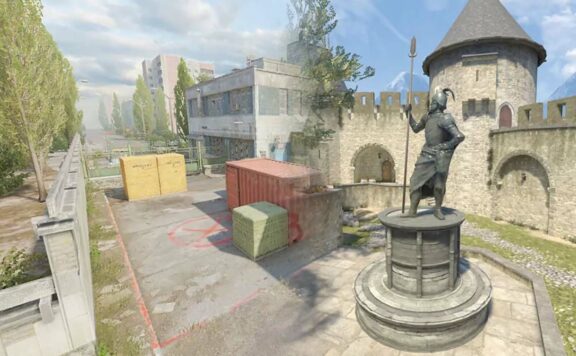
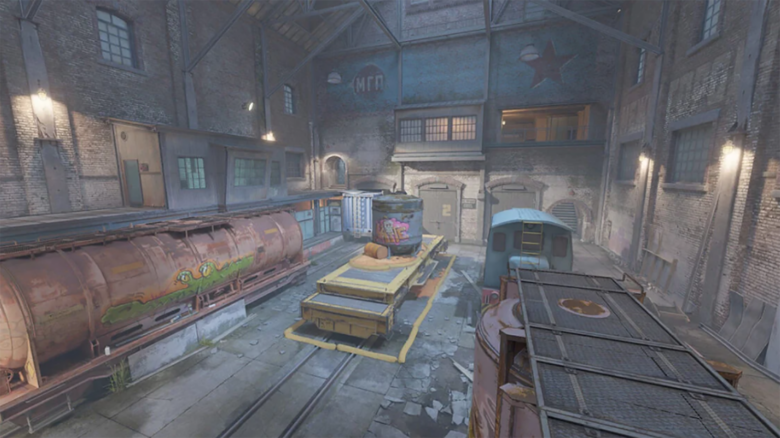
Train remains a familiar map in CS2, but several layout updates change how you navigate and communicate. If you rely on legacy CS callouts, you risk creating confusion during fast rounds where precise information matters.
You need updated callouts to match the current version of Train and keep your team aligned. A clear understanding of modern positions and pathways helps you relay accurate information and avoid vague or outdated calls that slow decision-making.
Train CS2 Callouts Guide
You need precise callouts on Train because small positional differences decide rounds. CS2 reshaped several legacy areas, so relying on older names often creates confusion. You should adjust your language to match the current layout, especially around A-Site elevation changes and the reworked B-Site structure.
Clear callouts help you coordinate executes, react faster on rotations, and trade more effectively. The names below reflect how most players communicate in 2026 competitive play. Consistency matters more than perfection, so stick to these terms once your team agrees on them.
Updated CS2 Train Location Names (2026)
The table below groups callouts by map flow so you can connect names with movement paths. You should use short, direct calls during rounds and expand only when time allows.
| Area | Callout | Description |
|---|---|---|
| Spawns | T Spawn | Terrorist starting area at round start. |
| Spawns | CT Spawn | Counter-Terrorist starting area and rotation hub. |
| T Side | Dumpster | Spot just outside T Spawn, often used when saving. |
| T Side | T Stairs | Stairway leading from T Spawn toward B. |
| T Side | Kitchen | Small side room near T Stairs, now less impactful. |
| Outer | Alley | Long outside lane between T Spawn and Ivy. |
| Outer | Pigeon | Narrow space before entering Ivy. |
| Outer | Ivy | Enclosed hallway frequently contested early by CTs. |
| CT Side | CT Tunnel | Passage connecting Ivy to CT Stairs. |
| CT Side | CT Stairs | Fast route from CT Spawn toward A-Site. |
| A Side | A Doors | Main CT entrance into A, often smoked by Ts. |
| A Side | A Main | Small interior room between CT Spawn and A. |
A-Site demands precise language because of stacked cover and vertical play. You should always pair train colors with exact positions to avoid misreads during retakes.
| A-Site | Callout | Description |
|---|---|---|
| A-Site | Yellow | Yellow train providing cover near default plant. |
| A-Site | A Red | Red train positioned opposite Yellow. |
| A-Site | Bomb Train | Default plant location on A. |
| A-Site | Hell | Tight cubby beside Yellow that hides defenders. |
| A-Site | E-Box | Electrical box near the center of A. |
| A-Site | Olof | Boosted box area used during early A control. |
| A-Site | Under Heaven | Space beneath the former Heaven structure. |
| A-Site | Longdog | Updated Popdog area without the ladder. |
You should expect mixed usage of Longdog and Popdog in pugs. Calling both once can prevent hesitation during fast executes.
B-Site changed more than any other area. You need to be specific when calling elevation, because vertical separation now plays a bigger role in post-plants and retakes.
| B Side | Callout | Description |
|---|---|---|
| B Side | Brown Halls | Main T hallway leading straight toward B. |
| B Side | Showers | Parallel corridor next to Brown Halls. |
| B Side | Underpass | Connector between Longdog and B Halls. |
| B Side | Connector | Mid link between A and B zones. |
| B Side | B Halls | Central T entry with access to ramp and upper. |
| B Side | B Ramp | Sloped path down into B-Site. |
| B Side | Upper B | Elevated entrance overlooking site. |
| B Side | Ladder | Climbable ladder near Upper B. |
| B Side | Sidewalk | Platform outside the main B entrance. |
Inside B-Site, color-based train calls remain standard. You should always add direction or depth when enemies move behind trains.
| B-Site | Callout | Description |
|---|---|---|
| B-Site | Blue | Blue train near the front of site. |
| B-Site | Orange | Orange train close to Catwalk. |
| B-Site | B Red | Red train positioned deeper on site. |
| B-Site | Bomb Train | Default plant area on B. |
| B-Site | Back Site | Open space behind the trains. |
| B-Site | Catwalk | Short elevated path near Orange. |
| B-Site | Headshot | Low angle under ladder toward Catwalk. |
| B-Site | Summit | Corner area beside site named after a legacy play. |
You should treat these callouts as shared language. When everyone uses the same terms, rotations tighten and mistakes drop.