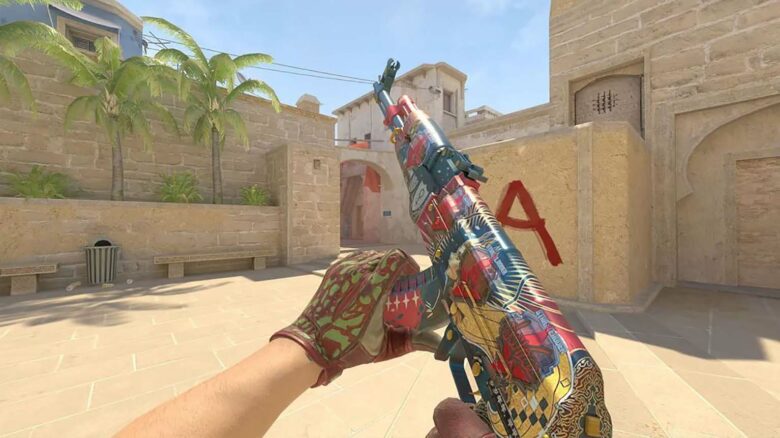
Valve recently pushed a Counter-Strike 2 update that changes how you handle reloading. When you swap magazines, you now lose every remaining bullet in the one you discard, even if you fired only a single shot.
This adjustment reshapes a core mechanic that many players have repeated for decades, and it has sparked divided reactions across the community. By reworking such a fundamental part of gameplay, Valve directly influences how you manage risk, resources, and mechanical discipline in every round.
No One Asked for It, and That’s the Point
You keep hearing the same complaint: no one wanted this. That part is accurate. Players did not campaign for a reload rework any more than they once demanded volumetric smokes, droppable grenades, or sweeping animation updates.
Yet those earlier changes settled into the game. The outrage faded. You adapted.
Counter-Strike has lasted because it keeps stretching your limits without lowering the floor. Its strength lies in depth. Even the best players in the world still refine their mechanics, positioning, and timing because complete mastery remains out of reach.
If you want that depth to survive, the ceiling has to move.
Reloading used to be routine. You fired, you reset, you moved on. The only real calculation involved sound—whether the click of a magazine swap might expose your position.
Now, every reload costs you something tangible.
When you replace a magazine, the remaining rounds disappear. That single rule forces you to weigh decisions you previously ignored.
- Do you reload after firing three bullets?
- Do you spam through a smoke?
- Do you top off before a retake?
- Do you risk entering a duel half-loaded?
You must think before pressing R.
Smoke spam becomes deliberate instead of automatic. You ask yourself whether chip damage justifies lost ammunition. Sometimes it will. Sometimes it will not.
That tension aligns with the game’s identity as a tactical shooter. Tactics require trade-offs. The new system introduces one more.
| Situation | Old Behavior | New Consideration |
|---|---|---|
| Early-round spam | Minimal penalty | Permanent ammo loss |
| Mid-fight reload | Mostly safe reset | Direct resource sacrifice |
| Late-round clutch | Rarely ammo-starved | Ammo scarcity likely |
You might notice that the loudest critics often fall early in rounds. If you spectate more than you survive, ammo management rarely affects you. At lower ranks, chaotic endings may increase at first.
Adaptation corrects that.
Players will learn when restraint wins rounds. They will track bullets more carefully. They will avoid unnecessary reloads. Discipline becomes measurable.
The update does not block entry for new players. You still point, shoot, and plant the bomb. But it rewards those who plan ahead and punishes careless habits.
That adjustment raises the skill ceiling without rewriting the core game.
You may not have requested higher stakes when reloading. Valve introduced them anyway, stating that the act should carry more weight. The change accomplishes exactly that.
Whether you like it matters less than whether it works.
Now, when you reload, you commit.
Valve Caught Between Action and Inaction
You see the pattern every time Valve updates Counter-Strike 2. Add a weapon collection and critics say the company only cares about cosmetics. Introduce community maps and others argue no one queues for them. Leave the game untouched and you hear claims of neglect. Adjust gameplay systems and the response shifts to demands about anti-cheat instead.
You may say you want change, but the community often resists it in practice. A recent reload adjustment showed this clearly. Even a mechanical tweak can trigger backlash after years of established muscle memory. Players react quickly when familiar systems shift, even if the change has design logic behind it.
Online discussion amplifies that tension. Content creators and commentators benefit from strong reactions, and negative framing spreads faster than measured analysis. Outrage travels well on social platforms, and repeated criticism can create the impression of wider instability than the data supports.
Meanwhile, measurable indicators remain stable:
- High concurrent player counts
- Frequent updates deployed without long delays
- Ongoing iteration when balance adjustments miss the mark
If Valve overtunes a feature, you can expect further patches. That pattern has held for years. Despite the noise, development continues, updates ship directly into the client, and the game maintains a large active audience. You may not agree with every decision, but sustained support and iteration show clear long-term commitment.