Season 2 arrives on February 17 after a deliberate delay meant to address your feedback and stabilize the game’s overall balance. Developers used the additional time to refine core systems rather than rush content out the door. You now step into a season shaped directly by community response.
The headline addition is Contaminated, a new large-scale battleground set inside Hagental Airbase in Germany. You can play it across multiple formats, from full-scale Conquest to tighter modes like Squad Death Match and Strikepoint. The map supports ground vehicles and helicopters, which keeps combat varied and layered.
Contaminated focuses on structured pathways and flanking routes that encourage coordinated pushes. You move between open vehicle lanes and more contained infantry spaces, forcing tactical decisions. The layout supports both aggressive assaults and defensive holds.
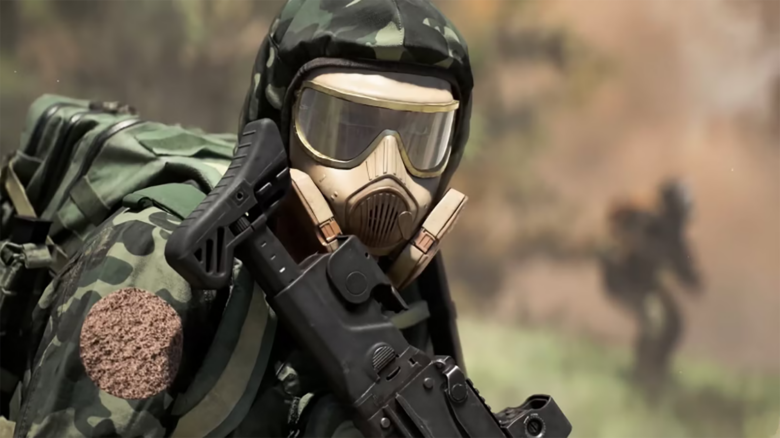
Season 2 also introduces a limited-time mode called VL-7 Strike, built around a spreading psychoactive smoke hazard. As the smoke expands across specific areas, you must equip protective masks and monitor your filter supply. If your filter runs out, your vision and awareness suffer.
This environmental threat extends beyond standard multiplayer. You will encounter the same smoke mechanic inside Battle Royale – Synthesis and Altered State Gauntlet, which alters pacing and positioning. The hazard pushes you to manage resources instead of simply chasing eliminations.
To help you navigate the new combat spaces, two vehicles join the roster:
- Little Bird attack helicopter
- Dirt bike
The Little Bird gives you high mobility and rapid-response firepower in aerial engagements. The dirt bike adds fast, low-profile movement for flanking and quick escapes.
Season 2 also expands your arsenal with new primary weapons:
| Weapon | Type | Intended Role |
|---|---|---|
| M121 A2 | Machine Gun | Sustained suppressive fire |
| GRT-CPS | Semi-auto Marksman Rifle | Mid-to-long-range precision |
| VCR-2 | Assault Rifle | Close-quarters engagements |
Each weapon fills a specific tactical niche. You gain clearer distinctions between suppression, precision, and aggressive short-range combat.
New gadgets further shift battlefield dynamics. The 9K38 IGLA introduces a lock-on anti-air option that strengthens your response to helicopters. The HTI-Mk2 Recon device detects hostile gadgets, disrupts drones, and can neutralize incoming rockets.
These additions reinforce counterplay. You no longer rely solely on positioning or raw aim; you can actively deny enemy equipment advantages.
Alongside content, Update 1.2.1.0 delivers broad systemic adjustments. Weapon balance receives one of the most significant changes in the patch.
Developers implemented a sweeping recoil rework across automatic firearms. You now experience more predictable kick patterns and clearer weapon identities. Automatic weapons feel steadier during sustained fire, but they still demand control.
This recoil tuning also limits unintended playstyles. For example, you can no longer stretch shotgun effectiveness into unrealistic long-range roles. Weapon categories now behave closer to their intended purpose.
Soldier movement sees targeted refinements as well. Acceleration feels smoother, and transitions between actions occur more cleanly. Sliding and jumping respond with better timing and control.
Vaulting over obstacles flows more naturally, reducing animation delays. Ladder interactions also receive updated animations that improve responsiveness. These changes affect every engagement, especially in close-quarters combat.
Several previously reported map exploits have been removed. You encounter fewer unintended sightlines or clipping issues. These fixes strengthen competitive integrity.
Vehicle and gadget bugs have also been addressed. You should notice more consistent performance when deploying equipment or engaging armor. Reliability now plays a larger role in tactical planning.
User interface improvements add clarity without redesigning the entire HUD. Indicators and information displays appear more polished and readable. You receive better situational awareness during intense fights.
Progression adjustments target one of the most criticized systems: Battle Pass advancement. You now earn tokens at a faster rate through Career XP and Weekly Challenges. This change reduces grind pressure and improves reward pacing.
If you previously struggled to complete time-limited tracks, the updated progression structure should feel more attainable. The system rewards consistent play rather than excessive time investment.
Season 2 blends narrative expansion with mechanical refinement. The limited-time mode ties directly into the broader conflict, integrating story elements into gameplay rather than isolating them in cutscenes.
You experience that narrative through environmental hazards, evolving objectives, and shifting tactical conditions. The smoke mechanic alone forces you to rethink positioning, rotation timing, and resource management.
By combining new maps, vehicles, weapons, gadgets, and structural rebalancing, Season 2 changes how you approach each match. You adapt not only to fresh content but also to revised fundamentals.
Every engagement now reflects tighter weapon tuning, smoother movement, and stronger counterplay tools. The result is a battlefield that demands deliberate decisions instead of reliance on exploits or overpowered loadouts.
Battlefield 6 Season 2 Patch Notes
Season 2 goes live on February 17 and introduces new maps, weapons, vehicles, and broad gameplay adjustments. You will notice balance changes, system tweaks, and quality-of-life updates across multiplayer and REDSEC.
REDSEC Mode Updates
You gain access to expanded content in REDSEC, including new map rotations and updated mission objectives. The mode now integrates Season 2 weapons and gadgets, giving you more loadout flexibility during operations.
Developers adjusted AI behavior and encounter pacing to reduce downtime between engagements. You should experience smoother progression flow and fewer stalled objectives.
Season 2 also applies global weapon tuning to REDSEC. Expect recoil refinements, improved hit registration consistency, and clearer damage feedback during close-quarters fights.
Performance updates target stability during large-scale firefights. You will see fewer desync issues and more reliable squad respawn behavior in high-player-count scenarios.