Blizzard revealed Diablo 4’s second expansion, Lord of Hatred, during The Game Awards 2025, signaling a major continuation of the game’s evolving narrative. The expansion advances the events that followed Vessel of Hatred, focusing on the final confrontation between the Wanderer and Mephisto. Along with expanding the story, players will gain immediate access to the newly introduced Paladin class, available at the start of Season 11.
Season 11 also refreshes Diablo 4’s core systems with notable adjustments that reshape how players craft and progress. The updated Tempering and Masterworking features, together with the new Sanctification mechanic, deepen item customization. Additionally, the refined Season Rank system and new Capstone Dungeons expand seasonal goals and gameplay variety, setting the stage for Lord of Hatred to push these systems even further.
Diablo 4: Lord of Hatred Ends the Age of Hatred Arc, Launching April 28, 2026
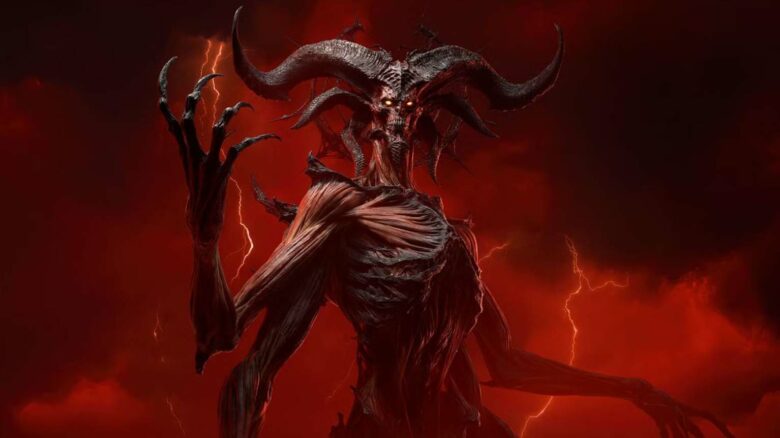
Announced at The Game Awards 2025, Diablo 4: Lord of Hatred marks the culmination of the Age of Hatred storyline and stands as the second full expansion following Vessel of Hatred in 2024. Releasing on April 28, 2026, the expansion places players at the center of Sanctuary’s final struggle against Mephisto, the Prime Evil of Hatred. His growing corruption threatens the world once more, forcing an uneasy alliance between players and Lilith, the Daughter of Hatred herself.
The story advances beyond Nahantu and sends adventurers to Skovos, a chain of islands southwest of Sanctuary first referenced in earlier lore but never visited in prior games. Known as the birthplace of human civilization in Diablo’s universe, Skovos blends the mysticism of ancient temples with the creeping presence of demonic corruption. With its oceanic atmosphere, maritime ruins, and deep mythological roots, the region offers both new enemies and exploration opportunities that contrast heavily with the dense jungles of the previous expansion.
Core gameplay systems receive extensive updates that refine class builds and item management. Loot filtering is being implemented, finally allowing users to isolate the exact gear types needed for specific builds. Alongside this feature, expanded item crafting comes through the restoration of the Horadric Cube and the addition of a Talisman system that introduces conditional bonuses. Each class benefits from redesigned Skill Trees offering new tiers of abilities, variant paths, and increased level caps for deeper customization.
Late‑game progression is also being reshaped with systems aimed at giving players more agency. War Plans will let players outline their preferred endgame focus—activities, modifiers, and combat routes—turning progression into a structured, strategy-oriented experience. The Echoing Hatred mode introduces a sequence of challenges functioning as a battleground for top-tier builds, pushing adventurers to test the limits of their gear and coordination. Meanwhile, the inclusion of fishing offers a slower-paced diversion within the same world, diversifying how players spend their time in Sanctuary.
Two Additional Playable Classes Joining Diablo 4 in the Lord of Hatred Expansion
The expansion’s roster grows with the addition of two playable classes, one of which is fully revealed—the Paladin—while the second remains under wraps for now. Players who pre-purchase the expansion gain immediate access to the Paladin for use in Season 11 before the expansion itself launches.
The Paladin returns as a holy warrior archetype deeply rooted in Diablo II’s legacy. Equipped with a hammer and shield and empowered by Light-based magic, the class combines strong defensive capabilities with area-clearing offensive power. Its skill set focuses on balancing melee combat and blessings that empower allies or purge demonic forces.
| Feature | Description |
|---|---|
| Class Role | Hybrid Fighter / Support |
| Core Strengths | Holy damage, shields, blessings |
| Signature Ability | Light-infused smiting skills and protective auras |
| Weapon Proficiencies | One-handed maces, flails, shields |
This return of the Paladin emphasizes faith-driven combat while reflecting the broader themes of corruption and redemption central to Lord of Hatred. Through updated animation systems and visual effects, each skill exhibits unique casting motions tied to sanctified energy rather than raw elemental force.
The mysterious second class has not yet been disclosed, but developers have hinted that it will differ sharply from the Paladin’s disciplined approach. Early discussion suggests it may expand the selection of ranged or hybrid archetypes, diversifying endgame team compositions further.
Players who pre-order the expansion gain additional benefits packaged across three editions:
Standard Edition
- Includes the Paladin Class and Vessel of Hatred expansion.
- Access to Lord of Hatred content upon release.
Deluxe Edition
- Includes everything in the Standard Edition.
- Adds Mini Chimera Pet Skorch, Skartaran Basilisk Mount Bundle, and High Heavens Guard Cosmetic Pack.
- Comes with a Premium Battle Pass Bundle and other in-game bonuses.
Ultimate Edition
- Contains all Deluxe Edition content.
- Adds the Umbral Knights Armor Set (six variants), 3,000 Platinum, Steed of the Shining Realm Mount, and Tymn, Echo of the Spire Trophy.
- Features the Ascent of the Just Town Portal Skin as an exclusive cosmetic.
Quality-of-life updates apply to every class regardless of purchase edition, ensuring that both returning and new players experience smoother progression systems. The streamlined build management, inventory optimization, and crafting loops strengthen the foundation for post-launch support.
By integrating long-desired systems with narrative closure, Diablo 4: Lord of Hatred establishes a unified endpoint for the Age of Hatred era. Players venturing into Skovos will confront Mephisto’s influence, wield new divine powers, and witness Sanctuary take its decisive step toward balance—or its final downfall.