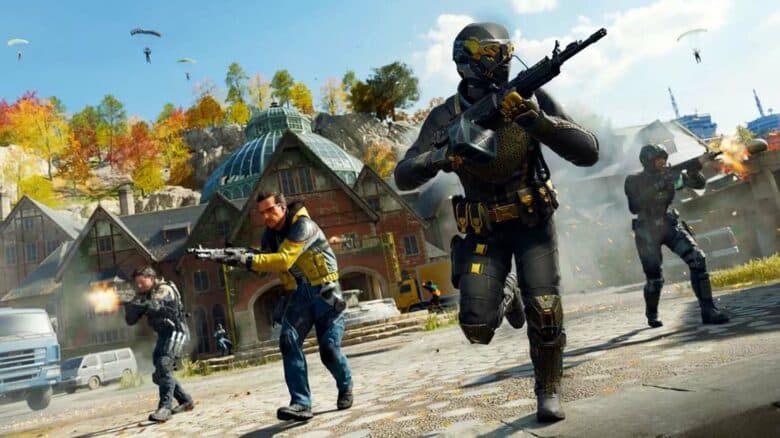
Treyarch Studios and Raven Software rolled out the detailed update notes for Call of Duty: Black Ops 7 and Warzone Season 1 ahead of the global launch on December 4, 2025, at 9 AM PT. The season marks a significant milestone for the franchise, introducing broad system updates, gameplay tuning, and technical improvements across both titles.
The developers focused on refining balance, fixing persistent issues, and enhancing performance. Players can expect weapon tuning across multiple categories, more stable matchmaking, and adjustments to map visibility and movement fidelity. The update also implements expanded anti-cheat tools and better progression tracking to maintain competitive integrity.
| Platform | Estimated Download Size | Availability |
|---|---|---|
| PlayStation | 16–30 GB | Pre-load Available |
| Xbox | 16–30 GB | Pre-load Available |
| PC (Battle.net) | 16–30 GB | Pre-load Available |
| PC (Steam) | 16–30 GB | Live at Launch |
With a broad goal of improving player experience, this release prioritizes function over spectacle. Season 1 weaves Black Ops 7 content directly into Warzone’s framework, allowing consistent weapon and operator integration across both games.
Key changes include:
- Performance adjustments to address network latency and frame drops.
- Visual updates for environments and UI clarity.
- Fixes targeting long-standing map glitches, including the popular Nuketown arena.
- Expanded security measures, such as TPM 2.0 and Secure Boot enforcement for PC users.
Season 1 sets the technical and content foundation for future updates throughout the year.
Black Ops 7 x Warzone Season 1 Changes Revealed
Black Ops 7 Season 1 and Warzone Update Details
Season 1 brings both games closer together under a shared ecosystem. Players can now use Black Ops 7 weapons and Operators in Warzone, creating a unified inventory across both titles. Cross-progression keeps progression levels identical between the two, eliminating the need to re-level gear.
Treyarch and Raven Software have refined gameplay systems to make movement and targeting more consistent. Aim Assist adjustments now differentiate between short- and long-range engagements to balance interactions between controller and keyboard users. Movement refinements aim to create smoother flow across the battlefield. Tactical Sprint has moved to the Sprinter Perk, but base sprint speed increased to maintain agility.
Raven’s new Open Matchmaking now prioritizes network stability instead of player skill for non-casual modes. This system produces mixed-skill lobbies, emphasizing connection quality over statistical ranking. Meanwhile, Treyarch shifts Black Ops 7’s Standard Moshpit into the Featured tab after high engagement, keeping skill-based matchmaking active for those preferring evenly matched challenges.
Weekly Progression and Challenge Rewards
Season 1 introduces a renewed Weekly Challenges structure. Each week provides a menu of objectives accessible through the in-game hub. Completing six tasks in any combination of Campaign, Multiplayer, Zombies, or Warzone unlocks a unique item and additional XP.
Even if players miss a week, previous challenges stay available until the season ends. This approach ensures flexibility while rewarding consistent play.
| Week | Reward Item | Unlock Method | Description |
|---|---|---|---|
| 1 | Ballistic Knife (Melee) | Complete weekly tasks | Launches spring-driven blades; can be retrieved after impact |
| 2 | NX Ravager (Special Weapon) | Themed event challenge | Bolt-launching compound bow; can fire explosive projectiles |
| 3 | Deadeye Drone (Scorestreak) | Challenge milestone | Remote aerial rifle drone for precision engagement |
The Ballistic Knife returns as an early standout reward, combining melee power with ranged attack potential. The NX Ravager follows as a tactical choice for midrange fights, and the Deadeye Drone offers remote assistance capabilities to control battlefield pressure.
New and Returning Weapons
Season 1’s arsenal expands the Black Ops 7 lineup, with new categories entering immediate use through the Battle Pass and game events.
Kogot-7 (SMG – Battle Pass Unlock)
- Fully automatic compact weapon emphasizing high fire rate and mobility.
- Ideal for close-quarters battles, prioritizing agility over accuracy.
- Prestige Attachment: MFS Kogot-7 Akimbo, enabling dual wielding with reduced range but greater offensive volume.
Maddox RFB (Assault Rifle – Battle Pass Unlock)
- Fast-firing assault rifle featuring large ammunition capacity.
- Draws from the Black Ops 4 version with improved recoil control and sustained damage capability.
- Prestige Attachment: 13″ MFS Echo-Fire Barrel increases cyclic rate by alternating recoil bursts at a slight precision cost.
Ballistic Knife (Melee – Weekly Challenge Reward)
- Mechanical knife launcher that fires recoverable blades.
- Offers stealth kills for close encounters and surprise ranged eliminations.
NX Ravager (Special Weapon – Event Reward)
- Compound crossbow using adjustable bolts, capable of high-damage or explosive outputs.
- Adds a tactical tool for both precision and area suppression.
These additions complement existing class variety, offering flexible playstyles across short and midrange combat roles.
Additional Attachments
New attachments expand weapon customization alternatives. A highlight addition this season includes:
Akita Scorchlink Akimbo (Shotgun Attachment – Weekly Challenge Reward)
- Converts the Akita shotgun into dual-wield configuration.
- Increases rate of fire and belt-fed ammunition supply.
- Incorporates an Overheat system, requiring reload management.
- Reduces hipfire spread consistency and range to balance increased volume of fire.
Players can now specialize in close-quarters mayhem while trading some precision for overwhelming fire density.
Updated Multiplayer Scorestreak
Deadeye Drone (Week 3 Reward)
This new Scorestreak gives players a remote aerial platform to scout and strike ground targets using an onboard rifle. Equipped enhancements allow varied operational roles:
- Extended Mag: Increases ammunition capacity for prolonged shooting.
- Grenadier Attachment: Adds miniature explosives for limited bombardment runs.
It functions as an intermediate tool between reconnaissance and direct offensive scorestreaks, rewarding situational awareness.
Newly Added Multiplayer Maps
Season 1 delivers four main arenas along with a remastered favorite. These maps vary between standard six-versus-six layouts and hybrid configurations supporting smaller engagements.
Utopia (6v6)
A reimagined research facility overtaken by a covert organization. Players battle through high-rise structures, laboratory corridors, and open courtyards. The design promotes vertical engagements with vantage points over critical objectives.
Fate (6v6)
A surreal environment blending memory sequences with terrain distortion. Combat occurs within fragmented architecture representing warped recollections. Visual elements shift continuously, forcing players to rely on adaptive sightlines.
Odysseus (6v6 / 2v2)
Set aboard a battle-scarred carrier trapped in temporal stasis. Close combat dominates on the deck, surrounded by suspended debris and frozen explosions. The setting emphasizes spatial awareness and timing in narrow environments.
Standoff (6v6 – Remaster)
A faithfully modernized interpretation of the classic Black Ops 2 locale. Familiar streets and vantage points return with upgraded textures and lighting. Its balanced sightlines preserve the map’s traditional utility for both competitive and casual play.
| Map Name | Player Format | Environment Type | Key Feature |
|---|---|---|---|
| Utopia | 6v6 | Research complex | Verticality and multi-level combat zones |
| Fate | 6v6 | Fragmented memory sequence | Shifting terrain and environmental illusions |
| Odysseus | 6v6 / 2v2 | Carrier in temporal freeze | Tight quarters emphasizing mobility |
| Standoff | 6v6 | Urban mid-sized map | Classic structure with visual overhaul |
These battlegrounds enhance variation by merging psychological environments, nostalgic locations, and experimental layouts.
Party Game Modes
Season 1 restores lighthearted classics under Party Games, granting a break from standard playlists.
- Prop Hunt: Players alternate between disguised objects and seekers, using environmental camouflage and communication to outlast each round.
- Rotational game modes reintroduce non-traditional objectives, focusing on creativity and situational awareness instead of kill count dominance.
Party categories include competitive scoring but with relaxed pacing ideal for casual sessions.
Movement, Aim-Assist, and Matchmaking Adjustments
Raven Software’s core gameplay modifications emphasize responsiveness and parity.
Aim Assist Modifications
- Sensitivity scaled independently by range to avoid exaggerated pull at distance.
- Activation thresholds recalibrated to prevent excessive stickiness, especially during mixed-controller lobbies.
Traversal Adjustments
- Movement transitions smoothed for more fluid sprint and slide continuity.
- Tactical Sprint converted into a selectable Perk while increasing static speed to balance pacing.
- Animation cancel timing optimized for seamless re-engagement.
Matchmaking Updates
- Warzone receives Open Matchmaking, reducing skill filtering and favoring connectivity quality for faster queue times.
- Black Ops 7 keeps Standard Moshpit with skill-based rules but features increased visibility on the playlist menu.
These systematic changes create clear distinctions between casual and ranked intentions, aligning gameplay pace with player preference.
Cross-Title Integration
Following the update, Warzone now fully incorporates Black Ops 7’s content roster. Weapon leveling, character skins, and cosmetics synchronize across both experiences. A rifle unlocked in Black Ops 7 appears instantly in Warzone, complete with attachment progress retained.
Key benefits include:
- Unified Progression: XP and weapon challenges track simultaneously in each game.
- Shared Armory: Loadouts utilize identical inventories regardless of title launch.
- Coordinated Season Events: Activities grant rewards usable across multiplayer, battle royale, and zombies modes.
Integration ensures long-term parity, preventing fragmentation between casual and competitive audiences.
Technical Notes and Anti-Cheat Improvements
Season 1 also includes backend protection expansion to maintain game security. Developers extended TPM 2.0 and Secure Boot requirements into Warzone, ensuring verified hardware environments. New detection layers now flag artificial boosting and modification actions.
Anti-cheat precision updated with:
- Improved detection accuracy for unapproved software automation.
- Adaptive review triggers analyzing unusual progression speeds.
- In-session integrity scans during live matches to catch rapid configuration changes.
Together, these measures strengthen player fairness across both platforms.
Seasonal Economy and Unlock Structure
The restructured Battle Pass distributes unlock tiers across both titles. Content includes weapons, Operator skins, emblems, and consumable boosters.
Tier Highlights:
- Early tiers deliver base weapon blueprints and Operator variants.
- Mid-tier introduces themed bundles aligning with the new maps.
- High-tier unlocks contain finishing moves and mastery camos.
Reward pacing ensures progression viability for both casual and competitive players.
| Tier Range | Reward Focus | Availability |
|---|---|---|
| 1–20 | Weapon unlocks / Attachments | Cross-title |
| 21–60 | Cosmetic customization items | Universal |
| 61–100 | Exclusive Operators / Finishers | End-tier milestone |
Purchase-based skips remain optional without affecting base unlock access.
Visual and Performance Adjustments
Graphical and rendering updates accompany Season 1 to align aesthetic quality between both games.
- Dynamic lighting enhanced to reduce glare variance between platforms.
- Texture streaming compressed for faster load distributions in Warzone.
- Camera transitions while sliding and aiming adjusted for visual stability.
Players should expect smaller optimization patches following the initial update to maintain rendering stability during large-scale matches.
Zombies and Event Integration
A supplemental update adds Astra Malorum, a new Zombies area available later in the season, connecting Black Ops 7’s narrative threads. Meanwhile, Haven’s Hollow enters Warzone as a new Resurgence-type map.
These environments present alternate thematic challenges: one focusing on cooperative survival progression, the other on condensed battle royale pacing. Together they tie seasonal content into a unified thematic arc.
Summary of Key Implementations
| Category | Notable Change | Summary Description |
|---|---|---|
| Weapon System | Kogot-7, Maddox RFB, Ballistic Knife, NX Ravager | Expanded arsenal covering SMG, rifle, melee, and special categories |
| Scorestreaks | Deadeye Drone | Controlled aerial rifle platform with optional grenade payload |
| Movement | Sprint and traversal overhaul | Improved animation continuity; Tactical Sprint converted into a perk |
| Matchmaking | Open system for Warzone | Connection-prioritized lobbies with diversified player groups |
| Progression | Cross-title leveling | Unified XP and weapon tracking for consistency |
| Security | TPM 2.0 & Secure Boot enforcement | Strengthened platform validation for anti-tampering |
| Visual Fidelity | Map enhancement and remaster | Upgraded lighting, geometry, and surface detail |
Developer Vision and Ongoing Adjustments
The Season 1 framework emphasizes consistent pacing between tactical depth and system accessibility. Developers intend to iterate continuously through mid-season updates, introducing weapon tuning passes and gameplay refinement based on analytic data.
Regular patches will adjust recoil patterns, sound design balancing, and network hit registration. Community challenges and special playlists will accompany upcoming events, further merging Black Ops 7 and Warzone under sustained seasonal cycles.
This suite of updates marks a full content and systems merge across both experiences, balancing competitive integrity with accessibility while maintaining legacy connections to previous Call of Duty titles.
Call of Duty: Warzone Season 1 Update Patch Notes
Season 1 brings major developments to Call of Duty: Warzone, introducing new maps, mode variations, mechanical adjustments, and updates to matchmaking and input balance. The update emphasizes tighter gameplay flow, map creativity, and a renewed focus on fair and accessible combat mechanics.
Haven’s Hollow, the newest Resurgence location, headlines this release. It merges Appalachian-inspired design with a mix of rural charm and cutting-edge architecture. The playable area features balanced terrain, tuned pacing, and a map scale that bridges smaller zones like Rebirth Island and larger arenas from previous updates. Players encounter a blend of open spaces, multi-level interiors, and fast drop-in opportunities. The layout delivers consistent loot and mobility without excessive vehicle reliance, ensuring compact, action-focused rounds.
Key areas across Haven’s Hollow include eight primary points of interest, each supporting distinctive player strategies and environmental characteristics.
| Point of Interest | Description |
|---|---|
| Coal Depot | A high-activity mid-sized area defined by building interiors ideal for ambushes. Open rooftops reward precise positioning but expose combatants to elevated risks. |
| Lumbermill | The largest structural zone on the map offers layered vertical space and access paths that allow players to cross rooftops and inner corridors. |
| Main Street | A dense zone home to hotels, shops, and a bank drop with elevated risk-reward dynamics similar to prior hotspot rooftops. |
| Mansion | A restructured layout built for close-range fights, including new indoor routes, attic cutoffs, and climbable access points. |
| Pond | A lower terrain zone with long sightlines, natural cover, and ziplines positioned for fast rotation through water-surrounded areas. |
| Research Center | Central hub built around a courtyard with multiple floors and tiered rooftops, supporting both short and mid-distance combat. |
| Riverboat | Multi-deck combat environment featuring ascenders and confined interior paths complemented by elevated open decks overlooking the water. |
| Train Station | Starting location offering plentiful supply points and confined routes that enable tight, early engagements. |
The Barn, initially revealed as the Homestead zone, received notable structural redesigns. A new two-story interior improves player flow, while additional fences and landscaping minimize exposure from nearby rooftops. The nearby cabin and ladder placements were refined for tighter engagements and more fluid movement toward rooftops and the nearby Church zone. These refinements aim to reduce choke points and long-range dominance without dulling combat momentum.
A new secondary locale enriches Verdansk’s return in this season. Signal Station, located near the Military Base, introduces a fresh radar-themed objective zone. Players can power a main radar array to earn a Tactical Heat Map—a short-term item signaling real-time hostile proximity. Gameplay in this location balances high altitude visibility with intentional sightline direction toward neighboring combat hubs.
Verdansk also brings back the Factory, now operating as a remastered legacy area. While remaining true to its original design, it incorporates new hazards like active missile assembly lines. The point of interest continues to link tightly with surrounding regions such as Superstore, maintaining robust engagement potential while improving rotational routes. Factory’s redesign invokes the spirit of the classic Stadium expansions without overpopulating combat density in the central city spaces.
Season 1 introduces Limited-Time Modes (LTMs) featured weekly, each available during specific weekends. These events change pacing and engagement style, offering players varying combat experiences while retaining Warzone’s base mechanics.
Planned Rotations Include:
- Week 1 – Buyback Battle Royale (Returning Mode):
Players redeploy automatically by spending in-game cash upon elimination. Available with Quad squad composition. - Week 2 – Amped Battle Royale (New Mode):
Increases base health and sustains extended firefights at closer engagement ranges. Runs as Quads. - Weeks 3–4:
No new LTMs operate during the scheduled holiday intermission. - Week 5 – Ultra Fast Resurgence (New Mode):
Future mode details pending. Expected to speed up respawn timing and maintain four-player teams.
The addition of weekend-specific modes allows the game to test modified health, pacing, and team mechanics without permanently shifting the core playlists.
Gameplay playlists also evolve this season. A newly implemented Open Matchmaking framework alters the matchmaking system for most non-casual modes. Under this structure, skill-based considerations are reduced, encouraging a broader range of encounter outcomes across diverse skill levels. All main squad setups—Solos through Quads—are initially supported in both the main Battle Royale and Resurgence rotations for Europe and North America. Other regions launch with Quads only before expanding after data collection and balancing review.
Developers will monitor global data to adjust matchmaking intensity and ensure equitable lobby distribution post-launch. This new backend system aims to test engagement health and accessibility metrics more transparently, with iterative tuning likely in early midseason updates. A community-facing Trello board will track playlist changes and regional mode adjustments.
Core System Adjustments
Among notable mechanical updates, Aim Assist tuning impacts both Warzone and Black Ops 7. Developers analyzed input-type balance and identified that controllers performed slightly better at short distances, while keyboard and mouse offered improved precision long range. This led to a modified rotational aim assist model.
The new setup requires active right-stick input for maximum rotational assistance. Players not maintaining target tracking gain only a minimum effect. This ensures controller users benefit from steady crosshair tracking when deliberately aiming while minimizing passive accuracy advantages. Additionally, the assist strength scales with distance to narrow discrepancies between device types. These calibrations mirror companion adjustments across Black Ops 7, maintaining consistency between multiplayer and Warzone environments.
Changes to threat detection and hardware integrity also factor into gameplay fairness. Improved anti-boosting tools make it easier to spot artificial progression methods. TPM 2.0 and Secure Boot mandates now extend to Warzone PC clients, ensuring only compliant systems can participate. Later this season, a quick verification tool will enable players to confirm that hardware and security settings meet updated PC requirements. The combined enforcement measures aim to preserve fair matchmaking and reduce exploit opportunities during high-traffic seasonal events.
Environmental and Discovery Enhancements
Haven’s Hollow introduces expanded environmental storytelling through subtle visual changes. The mixture of small-town Americana and cutting-edge labs builds a realistic tone while retaining modern structure. Seasonal lighting reflects late-summer mood without reducing clarity in outdoor firefights. Foliage density and color gradients have been purposefully optimized for immersion and player visibility.
Several of Haven’s Hollow buildings host interactive components and concealed elements inspired by non-canon Zombies environments. While not essential to gameplay, collectible-style secrets reward players who explore peripheral spaces. These additions enrich map familiarity over repeated matches, granting subtle replay incentives beyond stat progression.
Each primary POI incorporates vertical access features—ziplines, ascenders, and multi-tiered roofs—that sustain fluid engagements. Mobility remains intentionally grounded, with a limited selection of tactical vehicles. This design ensures individual movement and cover management remain decisive rather than vehicle control. Loot dispersal consistency supports faster regains and balanced early-match pacing across varied squad compositions.
Table: Mode Structure Overview
| Mode Type | Squad Size | Availability Window | Distinguishing Features |
|---|---|---|---|
| Battle Royale | All (Solos–Quads) | Core Rotation | Standard BR rules, large map focus |
| Resurgence | All (maps dependent) | Core Rotation | Short respawn delay and fast closures |
| Buyback Battle Royale | Quads | Week 1 LTM | Cash-based redeploy on elimination |
| Amped Battle Royale | Quads | Week 2 LTM | Increased health and prolonged firefights |
| Ultra Fast Resurgence | Quads | Week 5 LTM | Shortened downtime and extreme pacing |
Signal Station’s questline and new item—Tactical Heat Map—foster small-scale objectives encouraging squad coordination. The reward’s temporary display of incoming threats is balanced by permanent loss on death, making risk management essential. The POI’s height advantage enables spotting rotations but avoids rendering other surrounding zones obsolete by controlling outer sightlines.
Factory’s missile additions alter navigation patterns within its halls, forcing players to adapt to new hazards. The unchanged central structure supports nostalgia-driven orientation while incorporating environmental noise from active engines and alarms. Its design now complements Superstore’s aggressive playstyle, turning the connecting highway route into an unpredictable transition zone.
Performance and Interface Stability
The patch enhances general client stability, particularly for players switching between Black Ops 7 and Warzone. It carries the consolidation work started alongside the full franchise integration. System optimizations reduce transitional stuttering between lobby and drop while optimizing load-in lighting performance. User interface corrections simplify navigation across Resurgence and Battle Royale menus, aligning display consistency between console and PC dashboards.
Early post-launch telemetry reports will inform fine-tuning patches during the season. The development team plans to iterate rapidly on error tracking and bug fixes within the first operational weeks, focusing heavily on map collision points in Haven’s Hollow and the restored Factory region.
Competitive and Balance Considerations
Season 1 brings measured balance realignments. Weapon tuning aligns across both Black Ops 7 and Warzone frameworks, ensuring loadout options integrate naturally between titles. These balancing changes support unified damage profiles and attachment performance without major shifts in time-to-kill values. Competitive matchmaking integrity should remain stable across early season tournaments.
The reworked interaction of aim assist and open matchmaking intends to create a fairer skill ecosystem. Reduced skill-based priority in matchmaking means lobbies will rotate broader player segments, but will rely on accurate performance data to maintain engagement quality. This hybrid approach reflects experimentation toward long-term balance between mixed-skill play and competitive fairness.
Collectively, Season 1 positions Warzone for a technically grounded, forward-compatible experience while emphasizing map depth, fairer competition policies, and systematic anti-cheat protection.