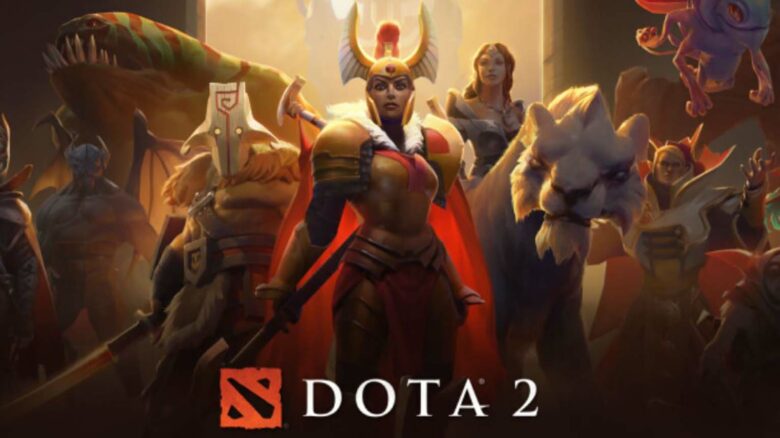
Since Dota 2 launched, you have seen the game evolve through frequent balance patches, system revisions, and a steady flow of hero additions. Although many of these heroes no longer feel new, those released after 2014 continue to influence how you play across casual and competitive levels.
These additions did more than expand the roster. You gained access to heroes that introduced unfamiliar mechanics, explored new design directions, and, in some cases, linked the game to external media, changing how you approach fights, movement, and strategy.
Standout Additions to Dota 2 After Launch
Monkey King, the Tree-Walking Skirmisher (2016)
You first saw Monkey King arrive with Patch 7.00, a patch that reshaped core systems across the game. He marked a turning point because Valve built him specifically for Dota 2, not as a legacy port.
His ability to leap between trees changed how you think about positioning and vision. The map suddenly mattered vertically, not just through lanes and fog.
You can still draft Monkey King in several roles. He fits as a carry, a mid, or a roaming support when your lineup needs early pressure and strong teamfight presence.
Key traits you rely on:
- Strong lane harassment through mobility
- High impact teamfight zone control
- Flexible role placement in drafts
| Common Roles | Strengths | Risks |
|---|---|---|
| Carry, Mid, Roamer | Vision abuse, sustain, scaling | Tree destruction counters |
Marci, the Brawler from Dragon’s Blood (2021)
You watched Marci move from animated series to playable hero, but her popularity did not come from recognition alone. Her kit delivered direct, aggressive gameplay that fit competitive Dota.
You use Marci for explosive movement and reliable damage. She closes gaps fast and forces fights on her terms, which explains her frequent bans in organized play.
At different points, you even saw her function as a core. With the right items, she could pressure objectives and threaten carries without losing relevance later.
Why she stays contested:
- Strong displacement and gap closing
- Scales with both levels and items
- Fits support or core strategies
Marci shows that cross-media heroes can still feel mechanically grounded in Dota.
Pangolier, the Master of Momentum (2017)
When Pangolier entered the game, you had to learn new input mechanics. Vector targeting on Swashbuckle rewarded precision rather than raw speed.
Rolling Thunder forced you to rethink teamfights. You gained temporary immunity and full movement control, which let you disrupt positioning instead of focusing on damage alone.
You still see Pangolier often in professional drafts. Teams value his reliability when piloted by players who understand angles, timing, and terrain.
What makes him demanding:
- Tight execution requirements
- High impact when played correctly
- Strong mid-game control
| Skill Focus | Reward |
|---|---|
| Positioning | Fight disruption |
| Timing | Objective control |
Underlord, the Map Control Specialist (2016)
You experienced Underlord as the final hero carried over from the original DotA era. His arrival closed a long chapter in the game’s transition to a fully independent roster.
Dark Rift, later redesigned into Fiend’s Gate, gave you unmatched control over movement. You could relocate allies and threaten objectives without committing to standard rotations.
You do not pick Underlord for mechanical flair. You choose him when your team needs structure, area denial, and predictable execution.
Reasons you draft Underlord:
- Reliable lane presence
- Strong control over chokepoints
- Strategic mobility for objectives
He remains accessible for newer players while still offering depth through macro decisions.
Mars, the Arena Commander (2019)
Mars brought immediate clarity to teamfighting. Arena of Blood defined where fights happened and punished poor positioning with clear consequences.
Early on, you needed practice to land Spear of Mars consistently inside the arena. Later refinements lowered the execution barrier without removing the skill ceiling.
You still see Mars dominate offlane drafts. His toolkit blends durability, control, and initiation, which keeps him relevant across many patches.
Core elements you leverage:
- Area denial through ultimate
- Reliable initiation tools
- Strong synergy with follow-up damage
You often associate Mars with aggressive offlane players who want to dictate tempo rather than react.
Kez, the Dual-Stance Experiment (2024)
Kez expanded the roster again and pushed complexity forward. You manage two distinct stances, each demanding different decisions during fights.
Swift stance favors speed and fluid engagements. Heavy stance shifts you toward commitment and impact, forcing you to plan each swap carefully.
You rarely see Kez mastered quickly. Teams still test his limits in Captain’s Mode, and his long-term role remains flexible.
What you must manage with Kez:
- Stance timing under pressure
- Adaptation during extended fights
- Role definition within drafts
| Stance | Focus | Risk |
|---|---|---|
| Swift | Mobility | Fragility |
| Heavy | Impact | Commitment |
Kez reflects Valve’s continued willingness to test new ideas without abandoning competitive structure.