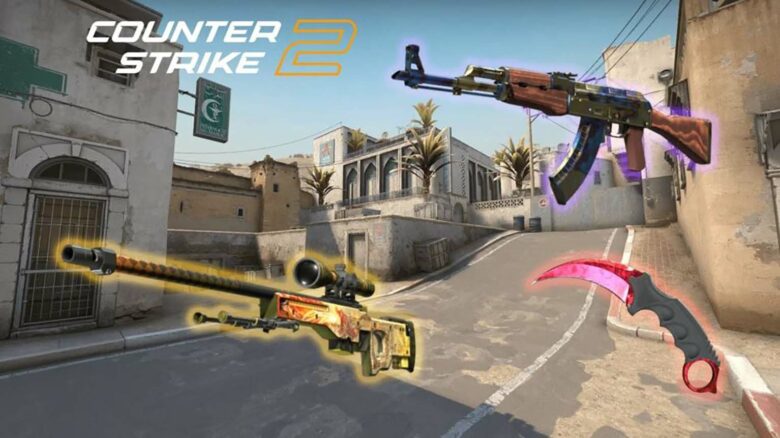
Weapon skins in Counter-Strike 2 do not improve your performance, but they shape how you feel and how others see you in the game. Some designs sell for modest amounts, while others reach six or even seven figures in private deals. Although million-dollar knives and rare souvenir rifles represent the extreme end of the market, even four-figure prices for standard knives have become normal within the community.
You see these prices because of two core forces: scarcity and open trading. Limited drop rates, discontinued cases, and specific pattern variations restrict supply, while a mature marketplace ecosystem allows you to buy, sell, and sometimes cash out skins. This mix of rarity, demand, and active trading has turned cosmetic items into valuable digital assets with a market that continues to evolve.
How Did CS2 Skins Become So Valuable?
The Origins of the Arms Deal Era
Valve changed the game in 2013 when it introduced cosmetic weapon finishes through the original Arms Deal update. You could obtain skins by opening cases, with each item tied to specific rarity odds that limited supply from the start.
This case-based drop system created controlled scarcity. Common items entered the market in large numbers, while rare knives and covert skins appeared far less often, which supported higher prices.
You also encountered pattern indexes and float values, which made certain finishes unique. For example, two skins with the same name could look different due to pattern placement or wear level. Rare visual variations, such as highly blue-dominant finishes, attracted strong demand.
Valve enabled trading and marketplace listings at launch. You could sell lower-tier drops, reinvest your balance, and work toward higher-value items. That structure turned skins into liquid digital goods rather than static cosmetics.
| Core Mechanic | Effect on Value |
|---|---|
| Case rarity tiers | Limited supply of top items |
| Pattern variations | Unique, collectible versions |
| Float system | Condition-based price gaps |
| Open trading | Continuous price discovery |
Growth, Rarity Expansion, and Capital Flow
Valve expanded these systems over time instead of replacing them. New cases introduced higher rarity categories, including gloves and additional knife finishes, which pushed ceiling prices upward.
Design complexity increased as well. Finishes such as Doppler variants and other distinctive styles widened the gap between standard and exceptional items.
Esports integration added another layer. You could obtain Souvenir skins tied to Major tournaments, often featuring gold player autographs or team branding. Limited event drops restricted supply further and drove sharp price increases for specific versions.
At the same time, third-party platforms created a broader cash economy. You could trade, sell, and price skins outside the Steam balance system, which brought new capital into the market.
By 2025, estimates placed the total CS2 skin market in the multi‑billion‑dollar range, reflecting years of structured scarcity, community demand, and continuous reinvestment.
Scarcity drives skin prices more than anything else
You see high prices because supply stays tight while demand stays strong. CS2 skins follow basic market logic: when fewer items exist and many players want them, prices rise.
Valve designs that imbalance on purpose. It limits how many premium skins enter circulation, while esports events, streamers, and collectors increase attention and buying pressure.
Scarcity in CS2 works on multiple layers at once:
- Drop odds
- Item tiers
- Case availability
- Pattern variations
- Float ranges
- Event-linked items
Each layer restricts supply in a different way, and together they create meaningful rarity.
How Valve controls rarity at every level
Valve controls the entire item pipeline, from case drops to rarity tiers. That control allows the company to decide how uncommon specific skins remain over time.
High-tier weapon skins sit in the Classified (Pink) and Covert (Red) categories. Their official case odds are about 3.2% and 0.64%. When you open a case, the probability alone ensures limited supply.
Knives and gloves are even rarer. The chance of receiving one is roughly 0.26%. Even then, each case contains many knife models and finishes, so landing a specific high-demand version becomes far less likely.
Pattern variation adds another filter. Special finishes such as Emerald, Ruby, Sapphire, or Black Pearl only appear within narrow pattern ranges. That means not every drop of a skin has equal value.
Float values create further separation. Factory New and low-float Minimal Wear versions exist in smaller quantities, and certain skins naturally produce fewer ultra-low float examples. Collectors often pay premiums for those cleaner versions.
When Valve removes a case from the active drop pool, supply becomes capped. No new items from that case enter the economy unless players open existing stock. Over time, that fixed supply can tighten the market.
Event-tied Souvenirs and limited stickers add temporary availability. Once the event ends, no new versions enter circulation.
In rare situations, Valve permanently discontinues an item, as happened with the M4A4 | Howl, which received a unique Contraband tier. When production stops entirely, scarcity becomes absolute.
Streamers and professional players increased demand
Rarity does not create value on its own. You need consistent buyer interest, and top competitors plus major creators help generate it.
When you watch a premier tournament and see a striking skin used on stage, you immediately connect it with status and cost. That visibility links the item to elite play and pushes more players to search for the same finish, even though supply remains fixed.
Well-known creators such as OhnePixel (Mark Zimmermann) center their content on case openings and rare item hunts. Each stream or video exposes thousands of viewers to specific skins at once. This concentrated attention can:
- Trigger short-term buying spikes
- Increase market tracking and speculation
- Reinforce the perception of exclusivity
Design still matters, but exposure often decides which skins gain momentum. When influential figures repeatedly showcase a particular item, you see stronger demand and faster price reactions across marketplaces.
Case openings and external marketplaces expanded the economy
Skin prices rise to the level buyers accept. Scarcity and popularity matter, but real-money integration through independent platforms pushes values higher and keeps trading active beyond the game client.
You participate in a system where digital items function as tradable assets. Profit motives, public visibility, and long-term holding strategies all shape demand.
- Short-term flipping: You buy undervalued skins and resell them at market rates. New sellers who want quick cash often list below fair value, creating margin for experienced traders.
- Use and resell: You purchase high-profile skins to display in matches or on streams, then liquidate them later and recover part of your spending.
- Long-term holding: You treat rare skins as collectible assets. Some inventories reach seven figures in value because owners expect future appreciation and rely on the option to cash out.
Reports have also linked skins to improper financial activity. Valve responded with tighter controls and transaction limits to reduce abuse and restrict automated trading networks.
Case openings reinforce supply. Each opened container injects new skins into circulation, while key purchases generate direct revenue for Valve. In March 2025 alone, case key sales reportedly produced tens of millions of dollars, reflecting how significant openings have become within the broader economy.
How do you convert skins into real money?
You still transfer items through Steam’s trading system, but external platforms handle the payment layer.
These websites connect to Steam using Valve’s official API. When you complete a trade, the API confirms the item transfer, and the platform credits your account balance.
You can then withdraw funds using common payment methods, depending on the service. Steam Wallet funds remain locked inside the ecosystem, but third-party platforms create an exit path into traditional financial systems.
This structure explains why high-value inventories hold real liquidity rather than purely in-game worth.
Different types of skin platforms
Early third-party sites faced controversy. Some gambling services used skins as informal betting currency, and underage access triggered scrutiny.
Valve introduced measures such as a mandatory 7-day trade hold after exchanges to disrupt automated betting workflows and reduce abuse.
Today, the ecosystem centers on several main models:
| Platform Type | What You Do | Key Function |
|---|---|---|
| Marketplaces | Buy or sell skins for cash | Direct price discovery and withdrawals |
| Instant trade sites | Swap skins immediately | Automated value-based exchanges |
| Case opening services | Open simulated containers | Custom drop pools and alternative formats |
Some platforms also offer features not available in the base game, including case battles and upgrade mechanics. These additions keep user activity high and extend engagement beyond Steam’s built-in tools.
High-Value Knives and Gloves Shaped a Collector Economy
You see a distinct collector culture emerge around the rarest knives and gloves. Many players spend thousands building inventories filled with specific finishes and models, even when they rarely equip them in matches.
Knives anchor this market because their drop rate sits at the lowest tier. Models such as the Butterfly Knife and Karambit attract steady demand due to their distinctive animations and handling style. Their limited supply, combined with visual appeal, keeps them at the center of high-end trading activity.
Gloves share the same rarity level but usually draw less attention. Still, certain finishes command premium prices. Sport Gloves | Hedge Maze and Specialist Gloves | Crimson Kimono often trade far above standard variants because collectors prioritize striking color combinations and clean wear levels.
Randomized pattern generation adds another layer of scarcity. You compete for specific outcomes rather than just the base skin.
- Doppler phases with full Ruby or Sapphire coloring
- Case Hardened “Blue Gems” with dominant metallic blue coverage
- Low-float versions with minimal visible wear
These variations create micro-markets within a single item. You do not simply chase a knife model; you pursue a precise pattern index and condition.
As a result, rare knives and gloves function as status markers inside the community and as long-term collector assets within the broader CS2 skin economy.
CS2 Skins Became Tradeable Investment Assets
You no longer buy skins only for appearance. You allocate capital with the expectation that prices may rise over time, even though outcomes remain uncertain and losses remain possible.
The market attracts two main approaches:
- Long-term holders build curated collections and treat rare items as stores of value.
- Active traders focus on liquid mid-tier skins and profit from short-term price swings.
Annual trading volume has reached billions of dollars, and certain rare items have multiplied in value over a decade. Examples often cited include early-release finishes that moved from double-digit prices to several thousand dollars. These gains draw new capital, but past performance does not ensure future returns.
A specialized segment operates within this ecosystem. Some participants accumulate Souvenir drops during Major tournaments. Others assemble specific sticker combinations to increase visual appeal and perceived scarcity.
Unlike most cosmetic systems, you can convert skins back into real-world money through marketplaces. That exit path drives speculation, supports liquidity, and turns digital items into a high-risk asset class rather than simple in-game decorations.
Why Certain CS2 Skins Sell for the Price of a Car
You see extreme prices when supply becomes almost nonexistent and demand stays high. In CS2, that usually means rare patterns, discontinued drops, and items tied to historic events.
A few skins stand at the top of the market:
- Karambit | Case Hardened (Blue Gem, Pattern #387) — estimated at $1.5M to $2.5M+
- AK-47 | Case Hardened (Blue Gem, Pattern #661) — $1M+
- Souvenir AWP | Dragon Lore (Factory New) — $150,000 to $450,000+
- Titan (Holo) | Katowice 2014 sticker — $85,000 to $100,000+
- Sport Gloves | Pandora’s Box — $40,000 to $80,000+
- M4A4 | Howl (StatTrak) — $35,000+
You pay these prices because only a handful of top-tier versions exist. “Blue Gem” variants require specific pattern indexes, and only a very small number of verified examples circulate in the market.
Discontinued content drives prices even higher. The Souvenir AWP | Dragon Lore dropped from Cobblestone souvenir packages, and that map no longer appears in the active pool. No new packages enter circulation.
Some items carry permanent supply limits. The M4A4 | Howl holds Contraband status, which means Valve removed it from regular case drops and froze its supply. Scarcity stays fixed.
Stickers also shape value. The Titan (Holo) | Katowice 2014 sticker links to a former professional organization, and no new capsules from that event enter the game. When you apply this sticker to rare skins like Blue Gems or Dragon Lores, collectors often pay a premium.
Even gloves such as Pandora’s Box command high prices because unboxing odds remain extremely low.
When you combine rarity, pattern desirability, discontinued sources, and collector demand, you get digital items that trade at levels comparable to luxury vehicles.
How Valve’s Steam Market update may redefine CS2 skin trading
Valve’s May 2026 revamp shifts the Steam Community Market closer to modern e‑commerce standards and changes how you evaluate and trade CS2 skins.
You now see live item previews that match a skin’s exact pattern index and float value. This removes much of the guesswork that once pushed serious traders toward outside platforms for visual verification.
New advanced filters also let you narrow listings with more precision. You can sort and locate specific variations faster, which reduces friction in high-volume trading.
These upgrades weaken one of the biggest advantages third-party sites held:
- Detailed item transparency
- Sophisticated search tools
- Cleaner browsing experience
Steam still does not support direct cash withdrawals. That limitation keeps external marketplaces relevant, especially if you want liquidity outside the Steam wallet.
Projects that adapt rather than compete head-on tend to hold ground. You will likely see more platforms focusing on niche targeting tools or specialized case formats instead of trying to outmatch Steam’s core infrastructure.
Why the CS2 skin economy continues to evolve
You operate in a market that rarely stands still. Valve adjusts mechanics, responds to regulation, and introduces structural updates that reshape supply and demand.
Regulatory requirements have already changed transparency standards. When authorities required official case drop rates in certain regions, Valve disclosed probabilities, which increased price awareness and altered buyer behavior.
Game updates also shift value across tiers. The October 2025 patch expanded trade-up contracts, allowing you to exchange five Covert items for a chance at knives or gloves. That change affected high-tier pricing and reduced extreme scarcity for select items.
Key forces driving ongoing change include:
- Policy adjustments that affect drop systems and availability
- Trade-up expansions that rebalance rarity ladders
- Market reactions to patches and item pool changes
- Third-party platforms funding tournaments and boosting visibility
You also see external marketplaces play a visible role in esports sponsorships, tying cosmetic value to competitive exposure.
These skins function as tradable digital goods embedded in a long-running competitive title. As long as updates, regulations, and player demand continue to shift, the structure of the CS2 skin economy adapts with them.
How CS2 Skins Stack Up Against VALORANT and Fortnite Cosmetics
When you compare cosmetic systems, trading defines the biggest gap. In Counter-Strike 2, you can buy, sell, and trade skins with other players, including through platforms that allow real-world cashouts.
VALORANT and Fortnite do not allow direct player-to-player trading. Once you purchase a skin, it stays locked to your account.
That difference shapes the entire ecosystem. CS2 skins function as digital items with market value, while VALORANT and Fortnite cosmetics function strictly as account-bound purchases.
In VALORANT and Fortnite, rarity often comes from limited-time releases, battle passes, or special collaborations. You show ownership to signal participation in a specific event or season.
CS2 also features limited cases and discontinued collections. However, it adds another layer: open trading markets where supply and demand determine pricing in real time.
Recent market estimates value the CS2 skin economy in the billions of dollars, driven by rarity, condition, and community demand. Items range from common finishes to extremely rare knives and pattern variations.
Several core factors influence CS2 pricing:
- Rarity tier (Covert, Classified, Contraband)
- Exterior condition (Factory New to Battle-Scarred)
- Pattern variations and float values
- StatTrak counters
- Sticker combinations
VALORANT and Fortnite focus more on visual design, animations, and themed bundles. Their pricing remains fixed by the publisher rather than fluctuating through open trading.
Rainbow Six Siege includes a marketplace, but it operates with in-game credits and no direct cash withdrawal. Transactions remain anonymous, and you cannot freely negotiate with another player.
CS2 offers more flexibility. You can list items on the Steam Community Market or use third-party marketplaces that support cash withdrawals.
That liquidity attracts collectors and traders. Some treat high-tier skins as long-term holds, especially discontinued cases or rare knife finishes.
Knives highlight the contrast clearly. In CS2, knives drop at extremely low rates and feature unique animations that make them desirable in matches.
Certain finishes, such as rare Doppler variations or specific Case Hardened patterns, command premium prices due to scarcity and visual appeal. The most famous example remains the Karambit Case Hardened “Blue Gem” in Factory New condition, which has extraordinarily low unboxing odds.
In VALORANT and Fortnite, premium melee skins exist, but they do not gain value through resale. You purchase them for personal use, not for trading.
Stickers also illustrate the difference. In CS2, tournament stickers have fixed supply once sales end.
You can apply them to weapons, creating unique combinations that influence resale value. Stickers from championship-winning teams or historic events often rise in price over time.
Because third-party marketplaces allow cashouts, many traders prefer them over the Steam Market. Cashout access increases competition and often leads to tighter pricing.
The result is a multi-layered economy. You participate not only as a player but also as a buyer, seller, or collector.