If you spend time in Dota 2, you will hear players talk about “ratting” or “Rat Dota.” The term describes a specific approach to the game that focuses less on direct team fights and more on map pressure and objectives.
You need to understand this concept if you want to read the map better and respond to split pressure effectively. Knowing what ratting means and how it works will help you recognize when to use it and when to shut it down.
Understanding Ratting in Dota 2
Ratting is a map-pressure strategy where you avoid direct team fights and focus on objectives. Instead of grouping with your team, you push lanes, cut creep waves, and damage buildings while opponents commit elsewhere.
You trade combat presence for structural pressure. When the enemy gathers to push one lane, you pressure another side of the map.
Your main goal is to force reactions. If opponents ignore you, they lose towers, barracks, or even their Ancient. If they teleport back to defend, you retreat and shift pressure to a different lane.
This approach relies on mobility and wave clear. Heroes who can quickly move across the map or summon units excel at this style.
Common ratting actions include:
- Splitting to the opposite lane during enemy pushes
- Cutting creep waves behind towers
- Teleporting out as soon as defenders arrive
- Repeating the process to stretch enemy resources
You win through attrition and decision pressure rather than kills. Each forced teleport creates a temporary numbers advantage for your team elsewhere.
Ratting works best when you read the map correctly. If you overstay, you feed. If you rotate at the right moment, you create constant lane imbalance that disrupts coordinated pushes.
This strategy demands discipline. You must resist unnecessary fights and focus on objectives that create long-term advantage.
The Origins of the Rat Dota Strategy
Players popularized the term “Rat Dota” around 2013. The strategy gained attention through professional play, especially from Alliance during The International 3.
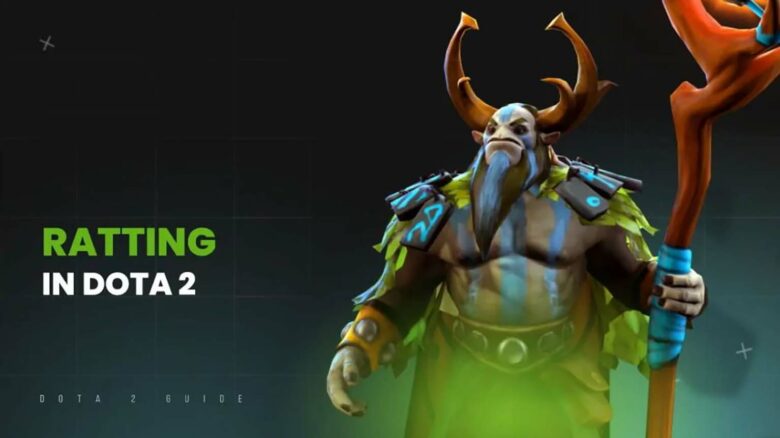
Alliance frequently avoided even fights and applied relentless split pressure instead. Henrik “AdmiralBulldog” Ahnberg became closely associated with the style, often picking heroes like Nature’s Prophet to teleport between lanes and chip away at structures.
Their success on the biggest stage cemented the label. Since then, players use “Rat Dota” to describe heavy split pushing and calculated fight avoidance in both professional and ranked matches.
Mastering the Rat Strategy in Dota 2
Core Requirements Before You Split Push
You cannot execute a rat strategy with every hero. To apply it consistently, you need at least two of the following three traits: mobility, wave clear, and structural damage.
1. Mobility
Mobility forms the backbone of ratting. You must move between lanes quickly, escape pressure, and reposition before the enemy can punish you.
Look for heroes who can:
- Relocate across the map with teleports or global abilities
- Cross terrain or disengage easily
- Avoid being locked down during ganks
Items can solve mobility gaps. Consider:
| Item | Purpose in Ratting |
|---|---|
| Boots of Travel | Rapid lane switching and map pressure |
| Blink Dagger | Instant repositioning and escape |
| Shadow Blade / Silver Edge | Safe wave clear and evasive play |
Your goal is simple: make yourself difficult to catch. If enemies cannot pin you down, they must waste time reacting.
2. Fast Wave Clear
Ratting revolves around lane pressure. To create that pressure, you must eliminate creep waves quickly.
Strong wave clear allows you to:
- Remove a wave in seconds
- Push it toward enemy towers immediately
- Disappear into fog before enemies respond
When you clear efficiently, enemy creeps advance into their structures faster. That movement forces defensive reactions.
You also reduce risk. The shorter you remain visible on the minimap, the harder it becomes for opponents to collapse on you.
3. Building Damage
You will not always get long windows to hit structures. When you do, you must convert that time into meaningful damage.
High tower damage:
- Increases urgency for enemy rotations
- Punishes slow responses
- Creates real structural threats
That said, raw building damage is not mandatory. Ratting often focuses more on forcing teleports than destroying towers outright. Still, if you can threaten objectives quickly, you increase the pressure you apply.
Aim for at least two of these qualities. If you have all three, you become extremely difficult to manage.
Executing the Rat Playstyle Properly
Ratting succeeds through discipline, map awareness, and timing. You must make deliberate decisions rather than randomly pushing lanes.
Choose the Right Moment and Location
Before you commit to a lane, study the map.
Ask yourself:
- Are multiple enemy heroes showing on the map?
- Are they grouping for Roshan or a tower?
- Are key disables visible elsewhere?
If several enemies appear on one side of the map, push the opposite lane. Distance increases your safety and stretches their formation.
If enemies are missing, slow down. Ratting without information turns into feeding.
Apply Lane Pressure Safely
Your primary task involves pushing waves deeper into enemy territory. You do not need to dive immediately for towers.
When you shove waves, you:
- Force creeps into enemy towers
- Remove backdoor protection from structures
- Create constant defensive obligations
Clear the wave quickly—ideally within one to three seconds—then retreat into fog. Do not linger.
Creeps also function as information tools. If your wave advances untouched, you know defenders remain elsewhere. If it disappears instantly, someone rotated.
After clearing, farm nearby jungle camps while waiting for the next wave. This keeps your economy stable without overexposing yourself.
Pressure Structures With Discipline
Once your creeps reach an enemy tower, backdoor protection drops. This creates a short damage window.
However, towers enable instant teleports. The moment you hit a structure, you reveal your position and invite reactions.
Follow these rules:
- Track teleport animations and sounds
- Keep an escape path ready
- Do not commit if multiple heroes can chain-disable you
Even a few hits on a tower can justify the move. You do not need to destroy it every time.
Force Rotations and Create Space
The true objective of ratting is to manipulate enemy movement.
When a defender teleports to stop you, that hero:
- Cannot join fights elsewhere
- Loses map presence for roughly a minute
- Reduces enemy numbers in other engagements
You effectively trade your lane pressure for numerical advantage somewhere else.
If one or two enemies respond, you already succeeded. You can disengage safely and allow your team to exploit the temporary imbalance.
Maintain Map Awareness
Ratting fails without vision and awareness.
You should:
- Watch the minimap constantly
- Note teleport cooldowns
- Track heroes with strong catch abilities
Avoid predictable patterns. Do not push the same lane repeatedly without variation. Switch lanes when possible to maintain uncertainty.
Balance Discipline and Opportunity
Ratting requires restraint. You must resist unnecessary fights if pushing lanes provides more value.
At the same time, remain flexible. If your pressure pulls multiple enemies and your team commits to a fight, evaluate whether joining shifts the outcome.
Treat ratting as a tactical tool, not a permanent isolation strategy. Use it when enemies overextend, group tightly, or ignore side lanes.
By combining mobility, fast wave clear, calculated tower pressure, and constant map awareness, you create sustained map tension. Enemies must respond, reposition, and defend on your terms rather than their own.
Top Picks for Split Pushing and Rat Play
Nature’s Prophet
You gain unmatched global presence when you choose Nature’s Prophet. Teleportation lets you appear on any lane at any time, which allows you to cut waves, pressure side lanes, and force reactions across the map.
His Treants handle much of the risky work. You can send them to shove waves or chip towers without committing your main hero. This approach reduces death risk while still applying steady structural damage.
Key strengths for ratting:
- Global mobility at all stages of the game
- Summoned units that push independently
- Strong scaling into late-game split pressure
If you want constant map pressure without grouping, this hero delivers it.
Arc Warden
Arc Warden excels at safe structural pressure through Tempest Double. You can summon a duplicate, equip it with Boots of Travel, and send it to a side lane while your real hero farms or stays hidden.
With items like Maelstrom, the Double clears waves quickly. Magnetic Field boosts attack speed and protects pushes, making tower damage more reliable.
Why Arc Warden fits rat play:
| Tool | Ratting Benefit |
|---|---|
| Tempest Double | Push lanes without risking your main hero |
| Boots of Travel | Rapid cross-map pressure |
| Wave-clear items | Fast creep removal |
You pressure objectives while minimizing exposure.
Anti-Mage
Anti-Mage relies on mobility and fast farming to stretch the map. Blink lets you move between lanes quickly and escape when opponents rotate.
You typically build Battle Fury, which clears waves in seconds. Later, Manta Style and strong right-click damage help you threaten towers while illusions add extra lane pressure.
Ratting also supports your timing. You farm, split push, and avoid large fights until your core items are ready. This style delays the game and forces the enemy team to respond to side lanes instead of grouping.
Shadow Shaman
Shadow Shaman offers tower damage from the support role. You clear waves with Ether Shock, then rely on Mass Serpent Wards to threaten objectives.
Once your creep wave reaches a tower, you drop wards and retreat. The wards continue attacking even if you leave the area, which allows you to pressure safely.
Core ratting elements:
- Reliable wave clear
- Strong single-point tower damage
- Blink Dagger for better positioning
You do not need farm priority to create meaningful structural pressure.
Lycan
Lycan applies steady split push through summoned units. Wolves can move down lanes on their own, slowly clearing waves and forcing reactions without risking your hero.
When you choose to commit, you buy items like Assault Cuirass to increase building damage. Shapeshift grants high movement speed, allowing you to disengage if multiple enemies teleport in.
You create pressure in two ways:
- Passive lane push with Wolves
- Direct tower focus during favorable moments
This combination forces the enemy team to constantly defend, which opens space elsewhere on the map.