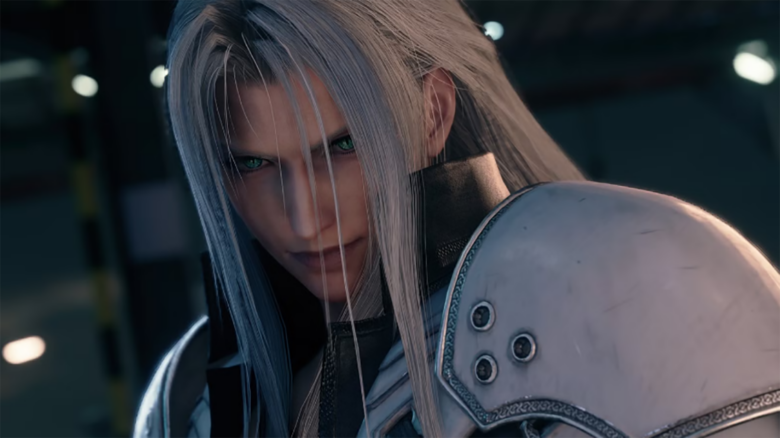
You follow the Final Fantasy VII Remake project as it moves toward its third and final entry, with director Naoki Hamaguchi confirming that development continues on Unreal Engine 4 and that the game’s official title is already finalized. These decisions signal a focus on technical continuity as Square Enix brings the remake saga to a close.
You also see the series expanding beyond PlayStation, highlighted by the recent release of Final Fantasy VII Remake Intergrade on Switch 2 and Xbox Series X/S. Square Enix has stated that Rebirth and the upcoming third game will also reach those platforms, marking a broader, multi-platform future for the full trilogy.
The Final Name for Final Fantasy VII Remake Part Three Is Locked In
You now know that Square Enix has settled on the official name for the last entry in the Final Fantasy VII Remake trilogy. Director Naoki Hamaguchi confirmed that the title decision is complete, ending a long period of internal discussion.
You can trace the final choice to conversations between Hamaguchi and creative director Tetsuya Nomura after Paris Games Week 2025. Nomura held final authority over the name, and the team deferred to his judgment once they narrowed the options.
You should note that the studio has not revealed the chosen title publicly. Square Enix also has not shared when you can expect that announcement, keeping the reveal schedule flexible.
You may remember earlier comments that reduced the name to two finalists. That process concluded before the end of 2025, aligning with the development roadmap for the trilogy’s conclusion.
Beyond the title, you also get clarity on the game’s technical foundation. The development team will continue using Unreal Engine 4, rather than moving to Unreal Engine 5.
You benefit from this choice in several practical ways. Square Enix prefers an engine its developers already understand, which allows faster iteration and fewer technical risks during late-stage production.
You saw the same approach succeed in Final Fantasy VII Rebirth. That game used a customized version of Unreal Engine 4 to support larger zones and smoother transitions.
Key technical decisions at a glance:
| Area | Decision |
|---|---|
| Game engine | Unreal Engine 4 (customized) |
| Engine change | Unreal Engine 5 considered, then declined |
| Reason | Stability, familiarity, and tailored features |
| Platform focus | Current-generation consoles and PC |
You can reasonably expect consistent performance across the trilogy. Keeping the same engine helps maintain stable frame rates and visual continuity from one entry to the next.
How Final Fantasy VII Remake Part Three Aims to Match Player Expectations
You can also expect Square Enix to refine features that resonated with players in Rebirth. One confirmed example is the return of Queen’s Blood, the collectible card mini-game.
You experienced Queen’s Blood as a turn-based card game played on a 3×5 grid. Players compete by placing cards to claim tiles and accumulate points through board control.
You will see that system expanded in the final chapter. Hamaguchi confirmed improvements but did not specify the exact changes, signaling ongoing experimentation rather than a simple copy.
Possible areas of expansion may include:
- Additional card types
- New board rules or layouts
- More advanced AI opponents
- Deeper progression systems
You should interpret this as a commitment to iteration rather than reinvention. The team wants to keep the core mechanics intact while giving you more reasons to engage with the mode.
You can also expect attention to pacing. Feedback around Rebirth highlighted uneven story flow in certain sections, and the developers have acknowledged that concern.
You benefit from this focus if you value narrative momentum. The final entry must resolve long-running character arcs while covering the most complex portion of the original story.
You may find it useful to see how these goals align across systems and design priorities:
Development priorities you should watch:
- Story pacing tuned for a single, complete experience
- Mini-games refined instead of replaced
- Technical consistency across all three titles
- Systems designed around player familiarity
You are not seeing radical shifts in direction. Instead, Square Enix appears focused on delivering a polished conclusion built on lessons learned from the first two games.
You still face many unknowns, including the title reveal and full feature list. However, the locked name, engine choice, and confirmed gameplay elements give you a clearer picture of what the final chapter aims to deliver.