You are stepping into Dota 2 Patch 7.40, a major update that arrives after a long gap since the previous large release. The patch delivers wide-ranging gameplay adjustments and introduces a new hero, setting a fresh direction for the game’s balance and strategy.
The update also lands during DreamLeague Season 27, continuing Valve’s familiar habit of releasing impactful patches in the middle of top-tier competition. You now face a shifting meta that affects heroes, items, and overall match flow.
Guitar Hero Dota
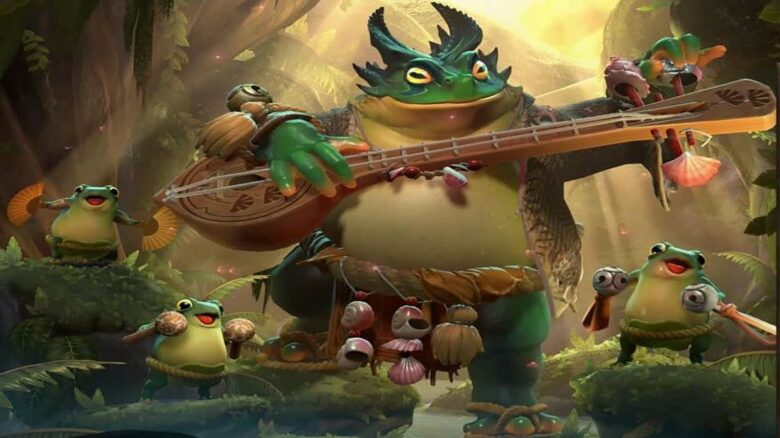
You interact with Largo’s ultimate as a timing-focused mechanic rather than a passive cast. Amphibian Rhapsody asks you to press inputs in sync with an audible beat, rewarding accuracy instead of speed. When you stay on rhythm, the ability responds immediately and scales through performance rather than raw stats.
What timing does for you:
- Grants stacking armor while you maintain correct inputs
- Lowers the mana cost of Largo’s songs for a short window
- Encourages deliberate pacing during fights
The input window feels forgiving, which lets you focus on positioning and team awareness instead of perfect precision. You do not need rhythm game experience to use the ability effectively, but consistent timing still provides clear advantages.
| Element | Impact on Gameplay |
|---|---|
| Beat accuracy | Improves survivability |
| Missed inputs | Ends the bonus state |
| Audio cues | Guide your timing |
You manage risk by deciding how long to maintain the rhythm while staying active in combat.
Ever more talented
You no longer trade skill levels for power spikes. The game now grants talent points directly, letting you unlock choices without delaying core abilities.
You receive points at key milestones:
- Levels: 10, 15, 20, 25
- Late game: 27, 28, 29, 30
| Level | What you gain |
|---|---|
| 10–25 | Talent choices without cost |
| By 22 | Automatic max of +2 All Attributes |
You feel the impact immediately. Your build stays intact while talents add value on top, which keeps progression smooth and predictable. This structure removes friction from decision-making and keeps your hero effective throughout the match.
Couriers No Longer Slowed by Regeneration Items
Couriers now travel at full speed even when carrying regeneration consumables. You receive Clarity, Healing Salves, Mangos, and similar items without the previous movement penalty.
This adjustment reflects how regeneration items work today. With limited shop stock, the earlier slowdown no longer serves a balancing role.
What changes for you in lane:
- Faster delivery of health and mana recovery
- Less downtime after trades or failed engagements
- More reliable sustain timing during early pressure
The update reduces unnecessary friction rather than adding power. You spend less time waiting on logistics and more time focusing on positioning, last hits, and lane control.
No one and nothing is safe from inflation
You feel the impact of inflation the moment the horn sounds. Iron Branches now cost 55 gold, a small increase that ripples through early-game decisions because your starting gold stays the same.
Iron Branches built their reputation on efficiency. You relied on them to stretch limited gold into stats, regen builds, and tight openings. That math now breaks in subtle ways, especially when you aim for exact totals.
What changes at the start:
- You trim a branch to complete a courier, wards, or regen.
- You delay a recipe or accept weaker lane stats.
- You rethink builds that depended on perfect gold use.
| Item | Old Cost | New Cost | Effect on Starts |
|---|---|---|---|
| Iron Branch | 50 | 55 | Less flexibility |
| Starting Gold | — | — | Unchanged |
You may expect adjustments to follow. Some prices feel foundational, and the game often corrects when tradition clashes with balance. Until then, you adapt, count every coin, and accept that even the most basic items no longer escape inflation.
Chen and his mount found dead in a ditch
You feel the impact most during the lane, where repeated mana drain no longer shuts you down as reliably. The Satyr Mindstealer’s Mana Burn now scales with a lower Intelligence multiplier, which reduces how often you lose spell access under pressure.
| Mana Burn Level | Old Scaling | Current Scaling |
|---|---|---|
| 1–4 | High | Reduced |
You notice fewer forced retreats and fewer lanes decided by attrition alone. This change limits how much control Chen applies through neutral creeps rather than positioning or timing.
You also see a shift in professional drafts. Players known for aggressive Chen lanes, including skem and Dukalis, lose some leverage when opponents can sustain mana longer.
You still need to respect Chen’s toolkit, but you no longer draft or play as if constant mana denial defines the matchup.
Diffusal Blade nerfed, for some reason
Patch 7.40 quietly changed how Diffusal Blade works, and you feel it the moment you pick illusion carries. Manabreak no longer triggers from illusions, so only your main hero burns mana on hit.
That single rule shift undercuts the item’s core purpose for several heroes. You can still buy Diffusal Blade, but most of its value disappears once your illusions start attacking.
What changed in practice
- Illusions no longer apply Manabreak
- Mana burn scales only with direct hero attacks
- Illusion-heavy carries lose pressure and kill potential
For Phantom Lancer and Naga Siren, this change hits hard. You rely on illusions to overwhelm targets, drain mana, and force mistakes. Without that interaction, fights stall and enemy cores escape more often.
Phantom Lancer suffers the most. Patch 7.40 stacks multiple reductions on top of this interaction change, leaving you with fewer winning matchups and weaker midgame spikes.
Meanwhile, mana-dependent cores like Medusa benefit indirectly. You struggle to threaten her pool, and she can play more freely as the game goes longer.
Lone Druid, Slark, and Treant Protector Reimagined
You now play Lone Druid with a different foundation. Spirit Bear functions as a full melee hero, and you no longer cast it as a standard spell. The summon sits in your innate slot, while Entangle shifts to a targeted cast from Lone Druid, giving you clearer control over roots during skirmishes. The change pushes you to manage two frontliners with tighter positioning and timing.
You approach Slark with a rebalanced core loop. Essence Shift moves to your innate, freeing space for a new tool. Saltwater Shiv fills that slot as an attack modifier that drains movement speed and weakens sustain by reducing passive regeneration and healing received. You pressure opponents through repeated hits, not just raw stat theft, which changes how you trade in lane and chase through fights.
You handle Treant Protector with more constant presence. Leech Seed converts into an attack modifier, letting you apply it through right-clicks with optional autocast. Vision control also shifts earlier. Eyes in the Forest becomes available through Aghanim’s Shard, enabling wide-area scouting once you invest in the upgrade.
Key adjustments at a glance
| Hero | Structural Change | Practical Impact |
|---|---|---|
| Lone Druid | Bear as innate; targeted Entangle | Stronger dual-unit control |
| Slark | New E ability; Essence Shift innate | Sustained pressure over time |
| Treant Protector | Attack-based Leech Seed; Shard vision | Persistent harass and map control |
You adapt your item choices and rotations around these mechanics, since each rework rewards active decision-making rather than passive scaling.